Best overall for mixed hard floors and suitable rugs: a rubber-bristle broom. Best for smooth hard floors: a flexible-blade broom. Best for compatible carpet: a carpet rake. Best for fur mixed with crumbs: a soft synthetic-bristle broom. This 2026 guide helps you choose the best pet hair removal broom by matching its head to your floors, rather than choosing by promises on the packaging.
- The best pet hair removal broom matches your flooring; rubber bristles are the starting choice for mixed-surface homes.
- Choose a flexible-blade broom for smooth hard floors, not as your default carpet tool.
- Use a carpet rake only when your carpet’s care instructions permit it.
- A pet hair broom gathers visible fur; it does not replace vacuuming embedded dirt.
Why this matters
A home with pets needs a cleaning tool that suits the surfaces where fur collects. Hair on kitchen tile presents a different job from hair caught in a hallway runner, and a tool that works comfortably on one surface does not automatically belong on the other.
Rustic Rose Market is a small, faith-driven general store serving everyday home and family needs. For pet hair removal, the useful starting point is simple: choose for your floor first, then consider comfort and cleanup.
A sensible 2026 purchase should make your regular routine easier without creating extra work. That means checking floor compatibility, how the head releases collected hair, and whether you can use the handle without bending awkwardly.
What makes the best pet hair removal broom?
Use these criteria before comparing broom types. A feature earns its place only when it helps with the surfaces you actually clean.
- Surface compatibility: Check both the broom instructions and your flooring care guidance. Do not assume that a tool labeled for pet hair suits every rug or finish.
- Hair collection: Look for a head that gathers fur into a manageable pile rather than repeatedly scattering it around the room.
- Comfortable handling: Choose a handle you can hold upright with relaxed shoulders. A head that requires forceful scrubbing is a poor match for an everyday sweep.
- Easy cleanup: Check how to remove hair from the head and whether the manufacturer permits rinsing. Cleaning the broom should not become the hardest part of the job.
- Access and storage: Consider furniture clearance, corners, and where the broom will live. A wide head is not helpful if it cannot reach your pet’s favorite resting spot.
Pet hair removal brooms at a glance
These are broom types, not individually tested product models. The order reflects their usefulness for the distinct household jobs below; floor-care instructions take priority over the ranking.
| Rank and broom type | Best for | Standout feature | Key limitation |
|---|---|---|---|
| 1. Rubber-bristle broom | Mixed hard floors and suitable rugs | Flexible bristles for gathering loose fur | Carpet compatibility varies; hair still needs collecting |
| 2. Flexible-blade broom | Smooth hard floors | Continuous edge for drawing loose hair together | Does not comb hair from carpet pile |
| 3. Carpet rake | Compatible carpet with caught hair | Tines reach between carpet fibers | Unsuitable designs or pressure can snag or disturb fibers |
| 4. Soft synthetic-bristle broom | Fur mixed with crumbs and dry debris | Familiar sweeping action for mixed messes | Hair can lodge in the bristles or escape the pile |
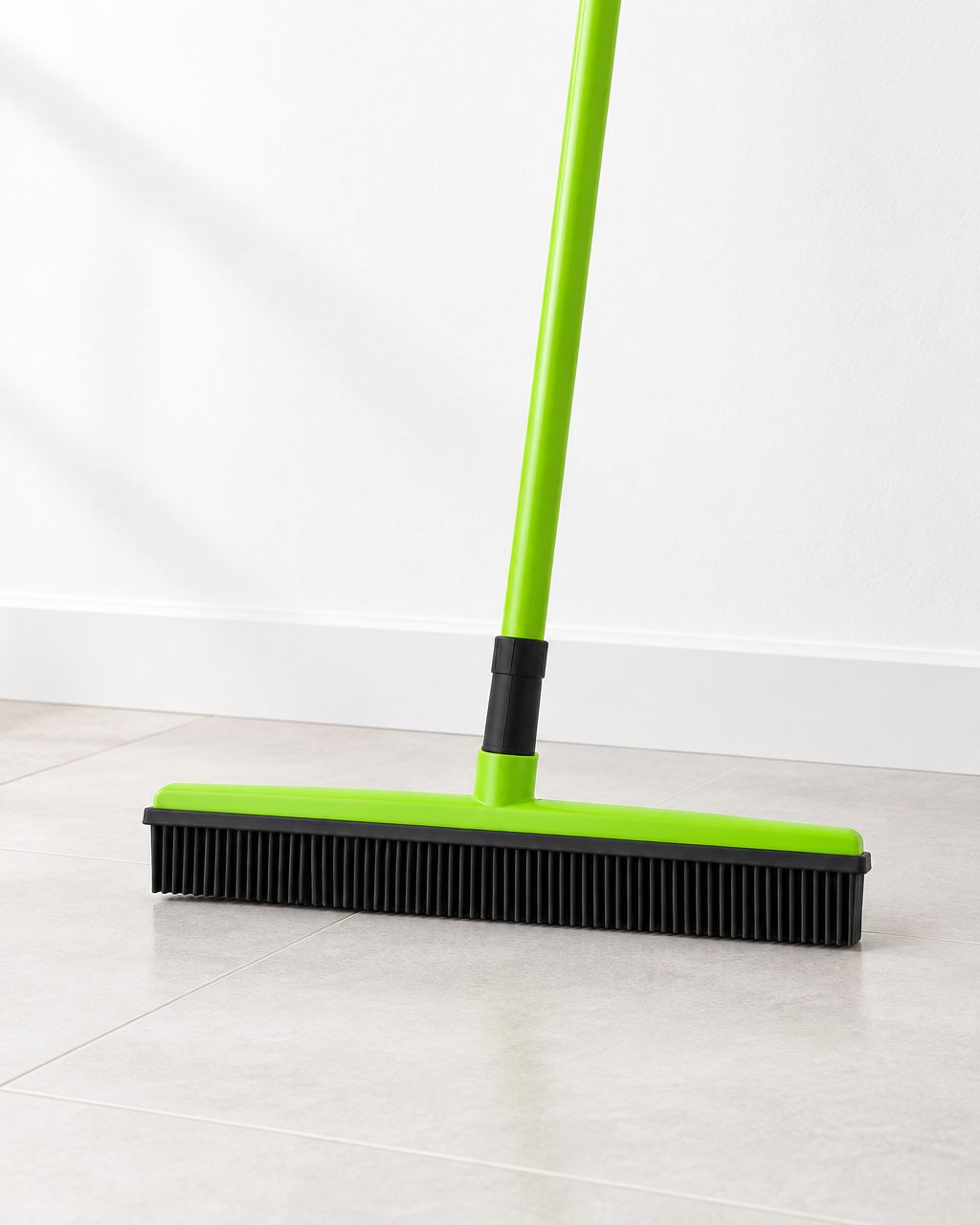
1. Rubber-bristle broom: best for mixed-surface pet homes
A rubber-bristle broom uses flexible bristles rather than a conventional bundle of synthetic fibers. It is a useful starting point when you want to gather loose fur from hard flooring and also have rugs that permit this kind of brushing.
Best for: Pet owners who want a manual broom for more than one permitted surface. Before choosing a model, confirm its intended surfaces rather than treating the word rubber as a compatibility guarantee.
Rubber-bristle broom pros:
- Flexible bristles provide a different sweeping action from a conventional fiber broom.
- A compatible model can serve both hard-floor and rug cleanup.
- The head gives you direct access to remove gathered hair.
Rubber-bristle broom cons:
- It does not collect hair into a sealed container; you still need a dustpan or vacuum.
- Loose fur and deeply caught carpet hair are different tasks.
- Bristle stiffness, head shape, and care requirements vary by model.
Use short, controlled strokes and bring the hair toward an open collection area. If the bristles drag, the rug shifts, or the pile starts to change appearance, stop rather than pressing harder.
For a 2026 household purchase, prioritize a clear surface-use description over claims that a broom handles every cleaning job. Verdict: Buy for mixed-surface cleanup when the broom and floor instructions agree.
2. Flexible-blade broom: best for smooth hard floors
A flexible-blade broom uses a continuous edge, often made from rubber or silicone, instead of separate bristles. Its role is to draw loose hair and debris along a smooth surface into a collection point.
Best for: Kitchens, entryways, and other smooth hard-floor areas where loose fur is the main problem. Check the model’s intended use; a dry-sweeping blade is not automatically a wet-floor cleaning tool.
Flexible-blade broom pros:
- A continuous edge has no bristle bundle for hair to wind through.
- The exposed blade is straightforward to inspect for trapped grit.
- It suits a controlled pulling motion across an unobstructed floor.
Flexible-blade broom cons:
- A blade does not comb through carpet fibers.
- Uneven surfaces and recessed grout interrupt continuous edge contact.
- Grit caught against the edge needs removing before another pass.
Start with the blade clean, then pull gently toward your collection area. Do not increase pressure to make the edge cross a raised threshold or catch in a floor joint; lift and reposition it instead.
A blade broom belongs on your shortlist when hard floors dominate your cleaning routine. Verdict: Buy for smooth hard floors; skip as your main carpet tool.
3. Carpet rake: best for compatible carpet with caught hair
A carpet rake has tines designed to pass through carpet pile. It is a more specialized option than a general broom, so compatibility matters more than the promise of pulling out a dramatic pile of fur.
Best for: Carpeted areas where the carpet manufacturer permits raking and the rake is designed for that carpet type. Loop-pile, delicate, and loosely constructed textiles need particular caution because a catching tine can damage fibers.
Carpet rake pros:
- Tines work between fibers rather than only sweeping across the top.
- The rake format suits targeted attention to a permitted carpeted area.
- Gathered hair is visible and ready for collection.
Carpet rake cons:
- An unsuitable rake can snag loops or disturb the carpet surface.
- It is not a general hard-floor broom.
- Raking does not remove all the dirt within a carpet.
Test gently in a hidden area only after checking the carpet’s care instructions. Stop immediately if the tines catch, fibers pull, or the surface changes; do not treat resistance as evidence that the tool is working harder.
In 2026, a carpet rake remains a surface-specific purchase, not an automatic upgrade over a broom. Verdict: Buy only for explicitly compatible carpet; skip when compatibility is unclear.
4. Soft synthetic-bristle broom: best for mixed dry messes
A soft synthetic-bristle broom is the familiar choice for sweeping loose crumbs, tracked-in dry debris, and surface fur together. It makes sense when pet hair is part of the mess rather than the only thing you are cleaning.
Best for: Routine hard-floor sweeping in areas that collect both household debris and loose hair. Choose a broom labeled for your floor, and keep its bristles free of embedded grit.
Soft synthetic-bristle broom pros:
- It handles mixed dry sweeping tasks with a familiar motion.
- An angled head can help reach along edges and into corners.
- It pairs with a dustpan for collecting the finished pile.
Soft synthetic-bristle broom cons:
- Fur can lodge among the bristles and need manual removal.
- Quick strokes can move lightweight hair away from your collection area.
- It is not intended to pull caught hair from carpet pile.
Use deliberate strokes rather than flicking the head across the floor. Pause to remove hair when the bristles start carrying it from one place to another.
Keep a conventional broom if it already handles your mixed messes comfortably. Verdict: Buy for general dry sweeping; skip as a dedicated carpet-hair solution.
How to use this ranking
This ranking separates the jobs rather than declaring one material best everywhere. Rubber bristles take the default position for mixed permitted surfaces; a blade, carpet rake, or conventional broom moves ahead when its specific use matches your home.
The criteria are surface compatibility, hair collection, handling, head cleanup, and access. There are no model-level performance scores behind this list, and the recommendations do not imply hands-on product testing.
Rustic Rose Market’s pet hair broom guidance puts practical fit before dramatic cleaning claims. A tool that suits your floors and is comfortable to clean deserves more attention than a promise to remove every strand.
A simple pet hair sweeping routine
Your technique should protect the surface while bringing fur to a place where you can collect it. Keep the routine gentle; extra pressure is not a substitute for the right head.
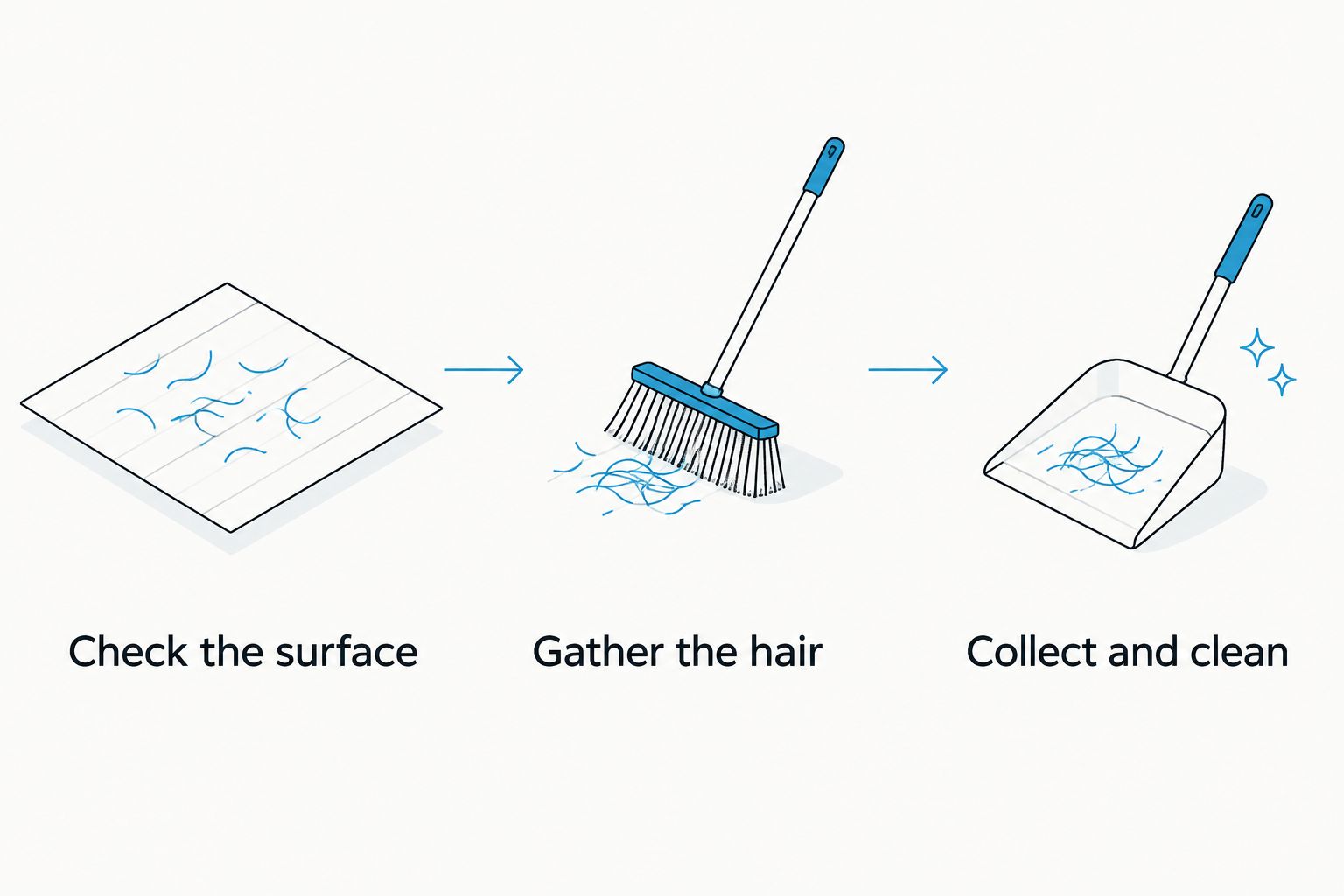
- Check the surface. Read the relevant care instructions, inspect the broom head, and remove trapped grit before starting.
- Gather the hair. Work in short sections with controlled strokes, keeping the collection area away from furniture legs and floor transitions.
- Collect and clean. Lift the pile with a dustpan or suitable vacuum attachment, then remove hair from the broom head.
Keep pets away from the working area while you sweep and collect the pile. Otherwise, paws and movement can spread the gathered hair before you finish.
Care for the broom after use
Remove clinging hair before storing the broom. Follow the manufacturer’s cleaning instructions; rinse only when permitted, and let a washed head dry before putting it away.
Inspect the working edge or bristles during cleanup. Replace a damaged head according to its instructions rather than continuing to scrape floors with a split edge or exposed fitting.
Which pet hair removal broom should you choose?
Rustic Rose Market recommends a rubber-bristle pet hair broom for mixed-surface homes when both the broom and flooring instructions permit its use. That is the default choice for an undecided shopper, not a reason to overlook a clear surface restriction.
Choose a flexible blade if your problem is loose fur on smooth hard flooring. Choose a carpet rake only for permitted carpet, and keep a soft synthetic-bristle broom when crumbs and everyday debris matter as much as hair.
Before ordering in 2026, read the current model’s surface guidance, handle details, and care instructions. If the listing does not answer a compatibility question, choose an option with clearer guidance rather than filling in the gap yourself.
FAQ
What’s the best pet hair removal broom for a home with dogs and cats?
A rubber-bristle broom is the starting choice for a home with mixed hard floors and suitable rugs. Confirm that both the broom instructions and your flooring care guidance permit its use.
Is a rubber broom better than a regular broom for pet hair?
A rubber broom is a useful dedicated option for gathering loose fur, while a regular soft-bristle broom suits mixed dry debris. Neither is best for every surface, and both need cleaning when hair collects on the head.
Can I use a pet hair removal broom on hardwood floors?
Use a pet hair broom on hardwood only when the broom and flooring instructions permit it. Keep the head free of grit and stop if it catches or marks the finish.
Will a pet hair broom replace my vacuum?
No, a pet hair broom does not replace vacuuming. Sweeping gathers visible hair, while a suitable vacuum also handles dirt that remains within carpet or along floor edges.
Can a carpet rake damage a rug?
Yes, an unsuitable carpet rake can snag fibers or disturb a rug’s surface. Check the rug’s care instructions before use and stop immediately if the tines catch or pull fibers.
How do I clean hair out of a pet hair broom?
Remove collected hair from the head according to the broom’s instructions. Rinse only if permitted, and let a washed head dry before storage.
Do I need separate brooms for carpet and hard floors?
You need separate tools when one broom is not approved for both surfaces. A compatible rubber-bristle broom can cover some mixed-surface routines, but a blade broom and a carpet rake serve different jobs.
One last thing
Before buying another broom, check where the fur is actually stopping your cleanup: on the floor, inside the broom head, or at the dustpan edge. If your current broom gathers hair well but collection is awkward, a better-fitting dustpan or a suitable vacuum attachment addresses the unfinished step more directly than another sweeping head.