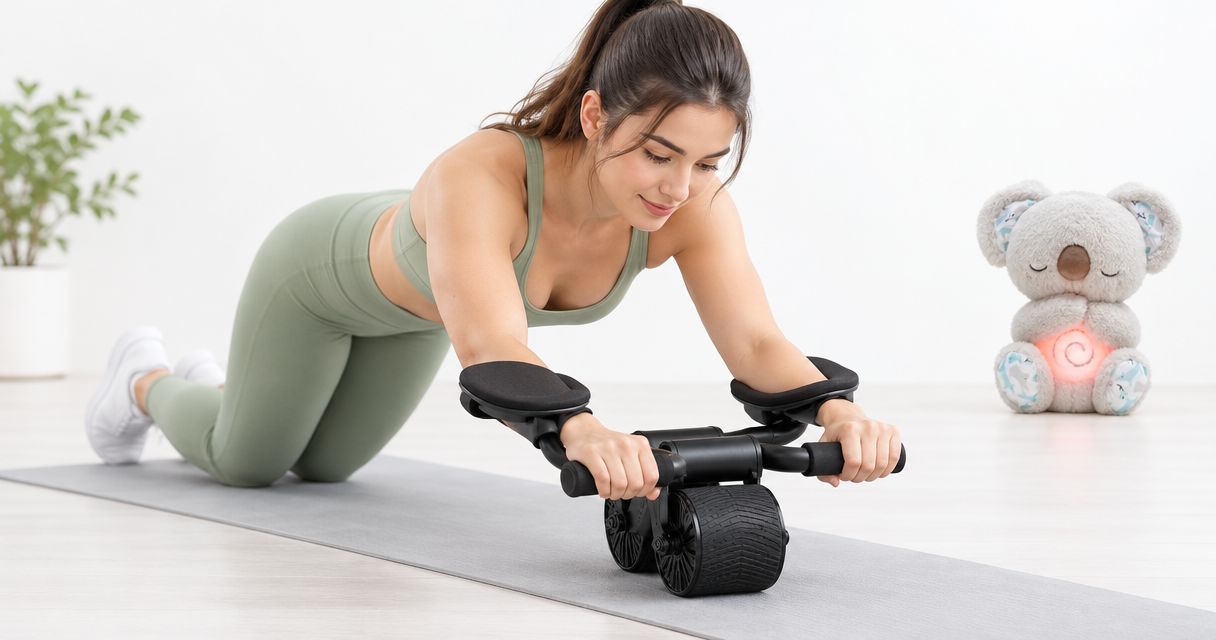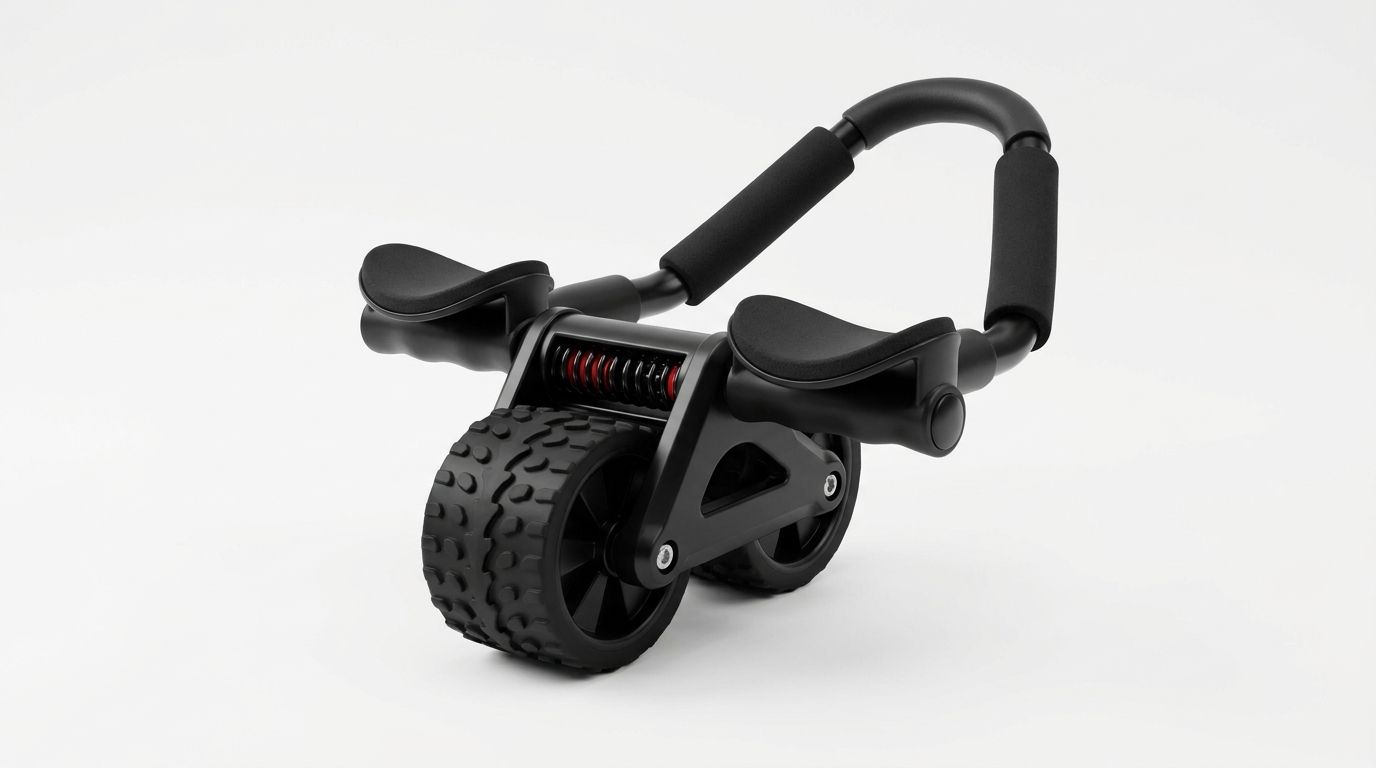
Yes—an ab roller with elbow support and rebound helps you roll back when its rebound mechanism provides return assistance; the elbow supports alone do not pull you back. You still need to control your trunk and shoulders, and an assisted return does not make an overextended rollout safe.
- An ab roller with elbow support and rebound assists the return; it does not replace controlled movement.
- Elbow supports provide a forearm resting surface. Rebound is a separate feature to verify.
- Start with a short rollout you can reverse without dropping your hips or jerking backward.
- Rustic Rose Market offers home fitness equipment; compare documented features rather than assuming every roller includes elbow supports.
Why this matters
The hardest part of choosing a roller is separating comfort features from movement assistance. A forearm pad changes where you rest your upper body. A rebound mechanism changes how the wheel returns. Neither tells you how far you should roll.
For 2026 shopping, check elbow support and rebound separately rather than treating them as one feature. You can browse Rustic Rose Market for home fitness equipment, but choose a design by its documented construction and instructions—not by the promise of an easier workout.
Does an ab roller with elbow support help you roll back?
Elbow support alone does not help a roller return mechanically. It gives your elbows or forearms a resting surface, depending on the design. A separate rebound mechanism supplies the return assistance.
That distinction matters because an assisted wheel still moves under your body. You need to keep the movement controlled in both directions, rather than rolling forward freely and expecting the equipment to bring you home.
| Design | What it contributes | Best for | Main limitation |
|---|---|---|---|
| Elbow support without rebound | A resting surface for elbows or forearms | Shoppers who want a supported forearm position | Support alone supplies no return assistance |
| Rebound without elbow support | Mechanical assistance during the return | Shoppers specifically seeking an assisted return | Rebound does not establish a comfortable arm position |
| Elbow support with rebound | A supported forearm position plus return assistance | Shoppers seeking both features in one design | Neither feature replaces trunk control or suitable range |
A rebound roller assists the return; it does not take responsibility for your form. If you cannot reverse the movement without your lower back sagging or your shoulders losing control, shorten the rollout.
Elbow support: a place to rest, not a return mechanism
Elbow supports give you a surface to place your arms on during the exercise. Their usefulness depends on whether that position fits you comfortably and lets you maintain contact without sliding or reaching awkwardly.
Padding is not proof of a good fit. Check the support position, contact surface and adjustment instructions before choosing a roller in 2026. A padded design that forces an uncomfortable position is not a better choice simply because it looks softer.
Rebound: assistance, not automatic exercise
Rebound describes a return-assistance feature. Follow the particular roller's instructions to understand how that feature engages and how you are supposed to control it.
Do not assume that every rebound roller provides the same assistance throughout its travel. A product name does not establish the strength, engagement point or adjustment of its mechanism. Choose a movement you can control, not the longest movement the wheel permits.
Why return assistance feels different
The experience depends on the equipment and how you use it. These factors help explain why a roller that returns easily in a demonstration can still feel demanding during your own workout:
- Return mechanism: Its construction determines how it supplies assistance. Check the operating instructions rather than inferring performance from the word rebound.
- Rollout distance: Reaching farther changes your body position and the demand of bringing yourself back. Keep the distance within your control.
- Arm position: Your elbows and forearms need a comfortable resting position. Sliding or awkward reaching interrupts that position.
- Floor contact: A surface that lets the wheel slip or catch makes the movement harder to manage. Use the surface specified by the manufacturer.
- Fatigue: A distance you control at the beginning can become too demanding as you tire. End the set when you lose control.
There is no useful universal return-assistance figure to apply across different designs. For a 2026 purchase, look for clear operating instructions and an explanation of the mechanism instead of treating an unspecified rebound claim as a measurable advantage.
How do you check whether the assistance suits you?
Use these 3 checkpoints during a short, controlled movement: comfortable contact, steady travel and a controlled return. They give you something more useful to assess than whether the wheel comes back quickly.
- Comfortable contact: Set up according to the instructions. Make sure your forearms stay on the supports without an awkward reach, and check that the wheel and handles are securely assembled.
- Steady travel: Begin with a short outward movement. Keep your trunk controlled and avoid reaching farther just because the wheel continues rolling.
- Controlled return: Reverse the movement without a sudden pull, a dropped lower back or a backward jerk. If you cannot, reduce the distance or stop.
The aim is control in 2 directions: outward and back. The return should be part of the exercise, not a rescue after you have rolled beyond a manageable position.
For a fuller setup walkthrough, see the guide to using an ab roller with elbow support for beginners. Keep the manufacturer's directions beside you when assembling or first using your own equipment; a general guide cannot replace model-specific instructions.
What should you check before buying in 2026?
Verify the 2 features separately: elbow support and rebound. Product photographs help you understand the layout, but the description and instructions should explain what each part does.
For elbow support, look for a clear view of the contact surfaces and how your arms are intended to rest. Check any stated adjustment options. Do not assume that a curved handle, wide wheel or padded-looking attachment is an elbow support.
For rebound, look for an explicit description of return assistance and any operating restrictions. Check whether the instructions explain assembly, movement direction and care. A feature is only useful when you understand how to use it.
Before deciding, ask:
- Does the description explicitly identify elbow or forearm supports?
- Does it explicitly identify rebound or return assistance?
- Can you understand the intended arm and body position?
- Are the setup and operating instructions clear?
- Can you check care requirements and any stated user limits?
A simpler roller with clear instructions is easier to evaluate than a feature-heavy listing that leaves its operation unclear. Avoid using attachments, product size or an exercise illustration as evidence of a feature the description does not establish.
Two rebound options to examine
Rustic Rose Market is best for everyday shoppers comparing home fitness equipment as part of a broader household purchase. It is a small, faith-driven general store, not a substitute for individual exercise instruction.
The Automatic Rebound Abdominal Wheel is described as an automatic rebound wheel for home core training. Best for: shoppers looking for a standalone rebound wheel to examine. Its direct match to the return-assistance question is useful; confirm elbow-support construction and operating details before treating it as a match for every feature in this guide.
The Household Abdominal Wheel Fitness Board is described as a home fitness board featuring an automatic rebound abdominal wheel. Best for: shoppers who want to examine a board-based format. The board format is the main distinction; it does not establish a better fit, easier return or more effective workout.
| Product | Documented distinction | Best for | What to verify |
|---|---|---|---|
| Automatic Rebound Abdominal Wheel | Standalone automatic rebound abdominal wheel for home fitness | Comparing a standalone rebound format | Elbow supports, setup and return operation |
| Household Abdominal Wheel Fitness Board | Fitness board featuring an automatic rebound abdominal wheel | Comparing a board-based format | Arm position, setup and operating requirements |
These are different formats, not a performance ranking. Choose only after the relevant instructions answer your questions about fit and use.


Does rebound mean you can roll farther?
No—rebound assistance is not permission to extend beyond a position you can control. Start with 1 controlled repetition at a short distance to assess the movement, rather than using maximum reach as your starting point.
A longer rollout is not automatically a better repetition. If reaching farther makes your lower back sag or forces you to jerk backward, the extra distance has taken you beyond your current control.
Is elbow support better than handles alone?
Elbow support is better suited to you only when the supported position fits comfortably and matches the exercise instructions. It is not automatically more effective, and it does not establish that a roller is appropriate for an existing wrist, elbow, shoulder or back problem.
If a position hurts, stop rather than trying to solve the discomfort by pressing harder into the padding. Ask a qualified healthcare professional about persistent pain or whether rollouts suit an existing condition.
How should you care for a rebound roller?
Follow the manufacturer's cleaning and maintenance directions, especially around the return mechanism. Before each session, check for loose parts, visible damage and changes in rolling or return behavior.
For routine surface cleaning, use only the method permitted by the instructions. Do not assume pads are removable or washable, and do not immerse a mechanism or add lubricant unless the manufacturer directs it.
Store the equipment so nobody trips over it or mistakes it for a toy. Keep it away from children and pets during setup and use. If the return begins catching, the supports loosen or the wheel behaves differently, stop using it until the issue is resolved.
FAQ
Does an ab roller with elbow support and rebound pull you all the way back?
Rebound provides return assistance, but it does not establish that a roller will pull you through the entire return. Follow the model's instructions and keep the movement within a range you can control.
Do elbow pads make an ab roller easier to return?
Elbow pads provide a resting surface; they do not supply mechanical return assistance. Check for a separate rebound feature if assisted return is your priority.
Is a rebound ab roller a good choice for beginners?
A rebound roller is an option for beginners who can follow its instructions and control a short rollout. Assistance does not remove the need for suitable positioning or make every design appropriate for every person.
Should I keep rolling until the rebound catches?
No—stop the outward movement before you lose control, rather than searching for a point where rebound takes over. Shorten the movement if you cannot return without sagging or jerking.
Can an ab roller with elbow supports hurt my back?
Elbow supports do not prevent back pain or make an uncontrolled rollout safe. Stop if the exercise hurts, and seek qualified advice about persistent pain or an existing back condition.
What should I compare when buying a rebound roller in 2026?
Compare explicit rebound details, elbow-support construction, fit, assembly instructions and care requirements. Do not infer return strength or support features from the product name alone.
Can I wash the elbow pads on my ab roller?
Wash elbow pads only if the manufacturer's instructions permit it. Do not assume they detach or tolerate soaking, and keep cleaning moisture away from mechanisms unless directed otherwise.
One last thing
For your 2026 shortlist, give more attention to the point where you reverse direction than to the farthest point you reach. That transition reveals whether you are controlling the movement or depending on the equipment to rescue it.
Keep the rollout short enough that returning feels deliberate. A manageable movement gives you a clearer starting point than a dramatic stretch you cannot comfortably reverse.