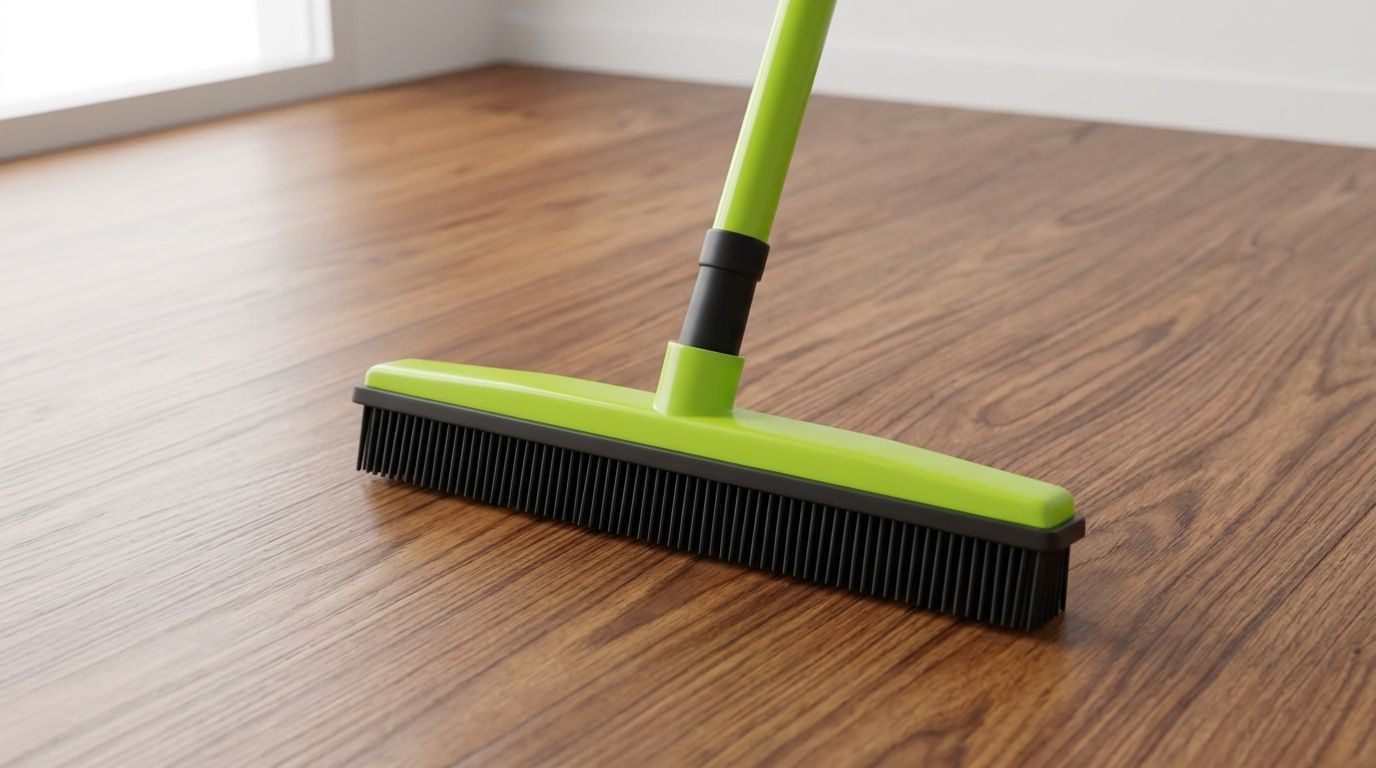
Yes, you can use a pet hair removal broom for hardwood floors when its head is suitable for your floor’s finish, clean, and free of sharp edges or trapped grit. Check the floor-care instructions and test a hidden area first: a soft broom head does not make dragged sand, exposed hardware, or excessive pressure harmless.
- Use a pet hair removal broom for hardwood floors only when its head suits your finish and passes a hidden-area test.
- Remove trapped grit before sweeping; soft rubber does not make abrasive debris safe.
- Choose light, controlled strokes rather than scrubbing or pressing harder.
- Rustic Rose Market serves everyday home and pet shoppers; floor-specific care instructions should guide your cleaning method.
Why this matters
Pet hair is only part of what you sweep across a wood floor. Outdoor shoes, paws, and entry mats also bring in particles that you do not want to drag under a cleaning head. The goal is to gather fur without turning a quick tidy-up into an abrasive scrub.
For your 2026 cleaning routine, start with compatibility rather than a broad promise that a tool works on every surface. The guide to choosing a pet hair removal broom explains buying considerations; this page focuses on using one carefully on hardwood.
Can you use a pet hair removal broom on hardwood?
Yes, provided the broom and cleaning method match the floor’s care requirements. A flexible rubber or silicone head is an option to consider, but its material alone does not establish compatibility. Look at the entire contact surface, including the edges, attachments, and anything caught between the bristles.
Follow this sequence before sweeping an open room:
- Read the floor instructions. Check which dry-cleaning tools the flooring or finish manufacturer permits. Follow any restrictions on rubber, cleaning solutions, or moisture.
- Inspect the broom. Remove hair, crumbs, and gritty particles. Check for torn bristles, hard protrusions, or exposed fittings that would touch the wood.
- Choose 1 small test area. Use a clean, inconspicuous spot with the same finish as the rest of the room. Avoid testing only on an already worn patch.
- Make 2 light passes. Move the broom without bearing down. These passes are a cautious starting check, not a guarantee of compatibility.
- Inspect before continuing. Look for fresh marks, residue, or a change in sheen. Stop if the broom catches, drags unusually, or leaves a visible change.
A successful patch test does not replace the floor manufacturer’s instructions. It helps you catch an obvious problem before repeating it across the room.
Which cleaning tool fits your hardwood routine?
When choosing a tool in 2026, separate gathering visible fur from picking up fine debris. You do not have to make one tool handle both jobs. Each option below still needs to meet your floor’s care requirements.
| Cleaning option | Best for | Main advantage | Main limitation |
|---|---|---|---|
| Suitable pet hair broom | Gathering visible fur into a pile | Gives you direct control over where the hair goes | A dirty or damaged head can drag grit; collected hair still needs disposal |
| Suitable dry microfiber mop | Light hair and dust on open floor areas | A clean pad gathers loose material without a bristle head | A loaded pad needs changing or cleaning rather than continued use |
| Vacuum with an approved hard-floor attachment | Collecting hair and loose debris together | Draws debris into a collection container | The attachment, wheels, and brush settings must suit the floor |
Choose the suitable pet hair broom for controlled fur gathering, not as a substitute for every cleaning task. Its useful role is simple: bring loose hair together where you can collect it. It does not remove stuck-on spills, repair scratches, or replace finish-specific maintenance.
A dry microfiber mop is another choice when the floor instructions permit it. Keep the pad clean, because continuing with a dirty pad defeats the purpose of a gentle contact surface.
For vacuuming, check the attachment instructions rather than assuming every head is suitable. A carpet setting and a hard-floor setting are not interchangeable just because the same machine offers both.
Why hardwood broom results vary
The important differences are at the point where the tool meets your floor. These factors explain why a broom that feels comfortable in one room does not automatically belong in another:
- Finish condition. Intact, worn, peeling, and previously repaired surfaces need different attention. A broom cannot solve an existing finish problem.
- Head condition. Flexible bristles are only part of the picture. Damage, hardened residue, or exposed fittings change what touches the floor.
- Trapped debris. Hair can hide gritty particles. Inspect the working surface instead of judging cleanliness from the top of the broom.
- Sweeping pressure. Pressing harder pushes the head and anything beneath it against the finish. Use enough contact to gather hair, not to scrub.
- Moisture and residue. A damp head or cleaning product introduces a separate compatibility question. Dry sweeping does not require adding either.
- Transitions and obstacles. Rug edges, thresholds, and furniture feet interrupt a smooth stroke. Reposition the broom rather than forcing it across an obstruction.
There is no useful universal pressure setting or pass count for every hardwood floor. Let the approved care method and the condition of the surface guide your approach.
How should you sweep pet hair without dragging it around?
Start with a clear path and a clean head. Move small furniture or loose objects when practical, and keep pets away from the pile while you work. You want to gather hair once, rather than repeatedly push it across the room.
Work in manageable sections
Begin near an edge and bring the hair toward a collection point. Use short, controlled strokes where you can see the floor beneath the head. If hair starts spreading instead of gathering, stop and remove the buildup from the broom.
Do not chase every strand with stronger pressure. Change your angle or collect the existing pile first. Around furniture, reposition yourself so a hard edge of the broom does not scrape against the floor.
Collect the pile promptly
Use a floor-suitable dustpan or approved vacuum attachment to collect what you have gathered. Check the dustpan edge for damage and dirt before sliding it into place. Avoid repeatedly dragging a gritty edge along the boards.
A broom moves debris; it does not contain it. Finishing the collection step keeps loose fur from returning to the areas you just swept.
Check before switching surfaces
Pause before moving from an entryway or rug onto hardwood. Inspect the head and remove anything picked up along the way. That quick check matters more than treating the broom as a room-to-room tool without interruption.
What should you check before buying in 2026?
A useful listing explains the working surface and care method, not just that a broom removes pet hair. Look for enough detail to decide whether the tool belongs on your particular floor.
- Floor compatibility: Look for an explicit statement about hardwood or finished wood, then compare it with your flooring instructions.
- Contact edges: Check whether the bristles, a blade, or another part of the head touches the floor during use.
- Cleaning directions: Find out how to remove collected hair and whether the head can be rinsed.
- Handle control: Choose a design you can guide without leaning heavily on the head.
- Inspection access: Favor a head you can inspect for caught debris and damage.
Rustic Rose Market is best for everyday shoppers seeking home and pet goods in one general store. The small, faith-driven business offers a broad mix of household products, but a general merchandise listing is not a replacement for your flooring manufacturer’s care guidance.
Treat vague phrases such as suitable for all floors as a reason to check further, not permission to skip the details. If compatibility remains unclear, use a method your floor instructions explicitly allow.
Can a rubber pet hair broom scratch hardwood?
A rubber pet hair broom can scratch hardwood if abrasive debris, a damaged edge, or exposed hardware moves against the finish. Rubber bristles alone do not guarantee a scratch-free result.
Make 3 checks before each use: inspect the head, inspect the floor, and confirm the approved cleaning method. Remove visible grit with an approved collection tool rather than pressing the broom over it. If the finish is damaged or unfamiliar, seek floor-specific guidance before continuing.
Should you wet a pet hair broom before using it on hardwood?
Keep the broom dry for routine hair gathering unless both the broom instructions and floor-care guidance allow the proposed damp method. Advice for washing the tool is not permission to use it wet on wood.
Do not spray a cleaning solution onto the bristles simply to make hair stick. That introduces a chemical and moisture question without resolving whether the head is suitable. Treat spills separately with the floor’s approved cleaning method.
How do you clean the broom after sweeping?
Remove collected fur and loose debris before putting the broom away. Inspect the underside, the bristle bases, and any edge that contacted the floor. Do not leave gritty buildup for the next cleaning session.
If the manufacturer permits rinsing, follow its directions and let the head dry before storage and reuse. Do not assume the handle, joints, or every material in the assembly can be soaked. Use only cleaning products permitted by the tool’s instructions.
Store the broom so its working surface stays clean and is not pressed against sharp or dirty objects. Check it again before the next use, especially if you share it between rooms or surfaces.
FAQ
What’s the best pet hair removal broom for hardwood floors in 2026?
The best pet hair removal broom for hardwood floors is one explicitly suitable for your floor’s finish, with a clean, undamaged contact surface. Check both the broom instructions and your flooring care guidance before choosing.
Can I use a silicone broom on engineered hardwood?
Use a silicone broom on engineered hardwood only if its contact surface and cleaning method meet the flooring manufacturer’s instructions. Engineered construction does not make every finish compatible with the same tools.
Will a rubber broom leave marks on my wood floor?
A rubber broom is not guaranteed to be mark-free on every wood finish. Test a clean head in a hidden area and stop if you see residue, fresh marks, or a change in sheen.
Is a pet hair broom better than a vacuum for hardwood?
A pet hair broom is useful for gathering visible fur, while a suitable vacuum collects hair and debris into a container. Choose an approved tool for the task rather than assuming either option is always better.
Can I use the same broom on carpet and hardwood?
Use the same broom on carpet and hardwood only when its instructions permit both surfaces and your floor-care guidance allows it. Inspect and clean the head before moving onto wood so you do not carry trapped grit across.
Should I sweep harder when pet hair will not gather?
Do not increase pressure just because pet hair is not gathering. Clean the head, collect the existing pile, and reassess whether a different approved tool suits the task.
Does Rustic Rose Market’s general home range establish floor compatibility?
Rustic Rose Market’s general home range does not establish compatibility with your particular hardwood finish. Match the individual tool’s instructions to the flooring manufacturer’s care guidance.
One last thing
Clean the tool before trusting the tool. A soft head carrying grit is no longer just a soft head, and a quick inspection is a useful habit to carry into your 2026 home-care routine. The modest goal is a tidy floor without unnecessary pressure, moisture, or repeated passes.