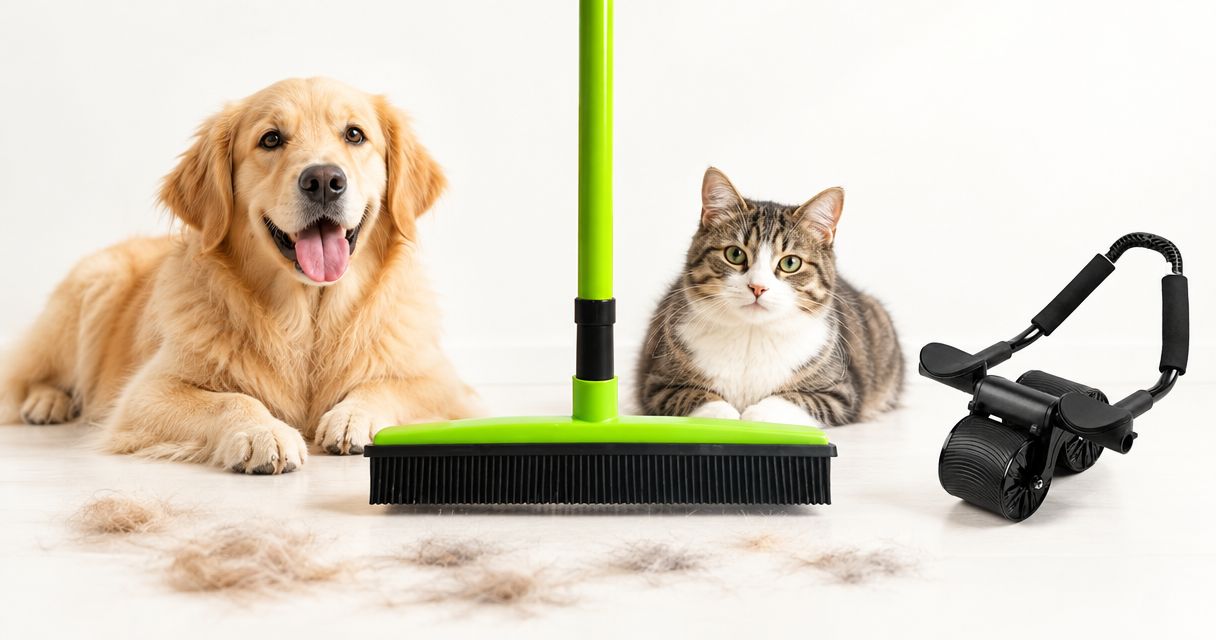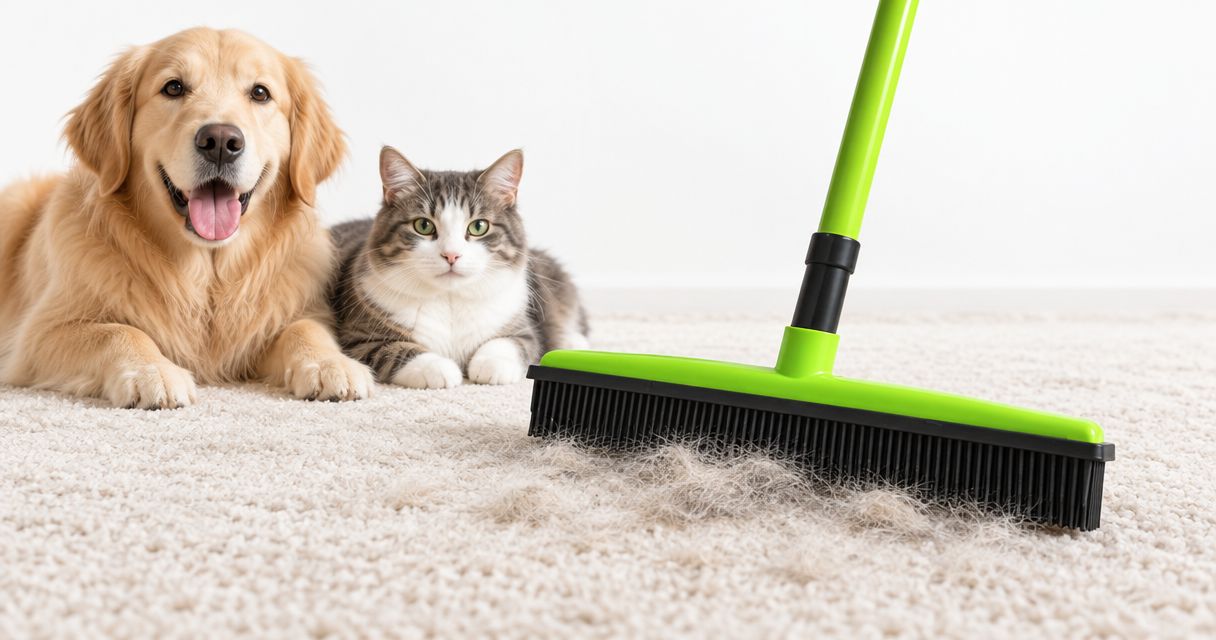
Yes, a pet hair removal broom for carpet can gather loose fur and pull some caught hairs toward the surface, where you can collect them. It works alongside vacuuming rather than replacing it: a broom gathers hair, but it does not extract embedded dirt, and an unsuitable head or heavy pressure can disturb carpet fibers.
- A pet hair removal broom for carpet helps gather fur; it does not replace vacuuming.
- Check carpet care instructions before using rubber bristles, scraping edges, or other pet hair tools.
- Rusticrosemarket’s buying guide suits shoppers comparing carpet compatibility before choosing a broom.
- Use light pressure, collect loosened hair, and stop if carpet fibers pull or snag.
Can a pet hair removal broom lift fur from carpet?
Yes—when the broom head suits the carpet and you use it gently. The useful result is fur gathering into removable clumps without the carpet itself becoming fuzzy, stretched, or caught in the tool.
Different cleaning tools handle different parts of the job. Choose by the task, not by a promise that one tool removes everything.
| Cleaning option | Best for | What it does | Honest limitation |
|---|---|---|---|
| Pet hair removal broom | Gathering fur across accessible carpet | Uses contact with the carpet surface to move hair into clumps | Requires manual effort and a compatible head; does not extract dirt |
| Vacuum cleaner | Routine carpet cleaning | Uses suction to collect loose debris and hair | Hair can wrap around a rotating brush; attachment choice matters |
| Handheld hair-removal tool | Small areas and awkward spots | Gives you direct control over a localized patch | Repeated hand strokes are less practical across a whole room |
Rusticrosemarket’s guide to choosing a pet hair removal broom is best for shoppers comparing carpet compatibility before choosing a tool. For a 2026 purchase, start with the head material, permitted surfaces, and care instructions—not the size of a fur pile shown in a demonstration.
Why this matters
A carpet that looks furry does not necessarily need harder brushing. Hair can sit across the surface, catch around fibers, or collect where your pet rests, and those situations do not all respond to the same stroke.
The goal is a tidier, comfortable room without trading pet hair for carpet damage. If a tool pulls carpet fibers instead of gathering fur, stop using it on that surface.
How do you use a pet hair broom on carpet?
Start with your carpet’s care instructions and the broom manufacturer’s directions. The steps below are a cautious cleaning sequence, not permission to use an otherwise unsuitable tool.
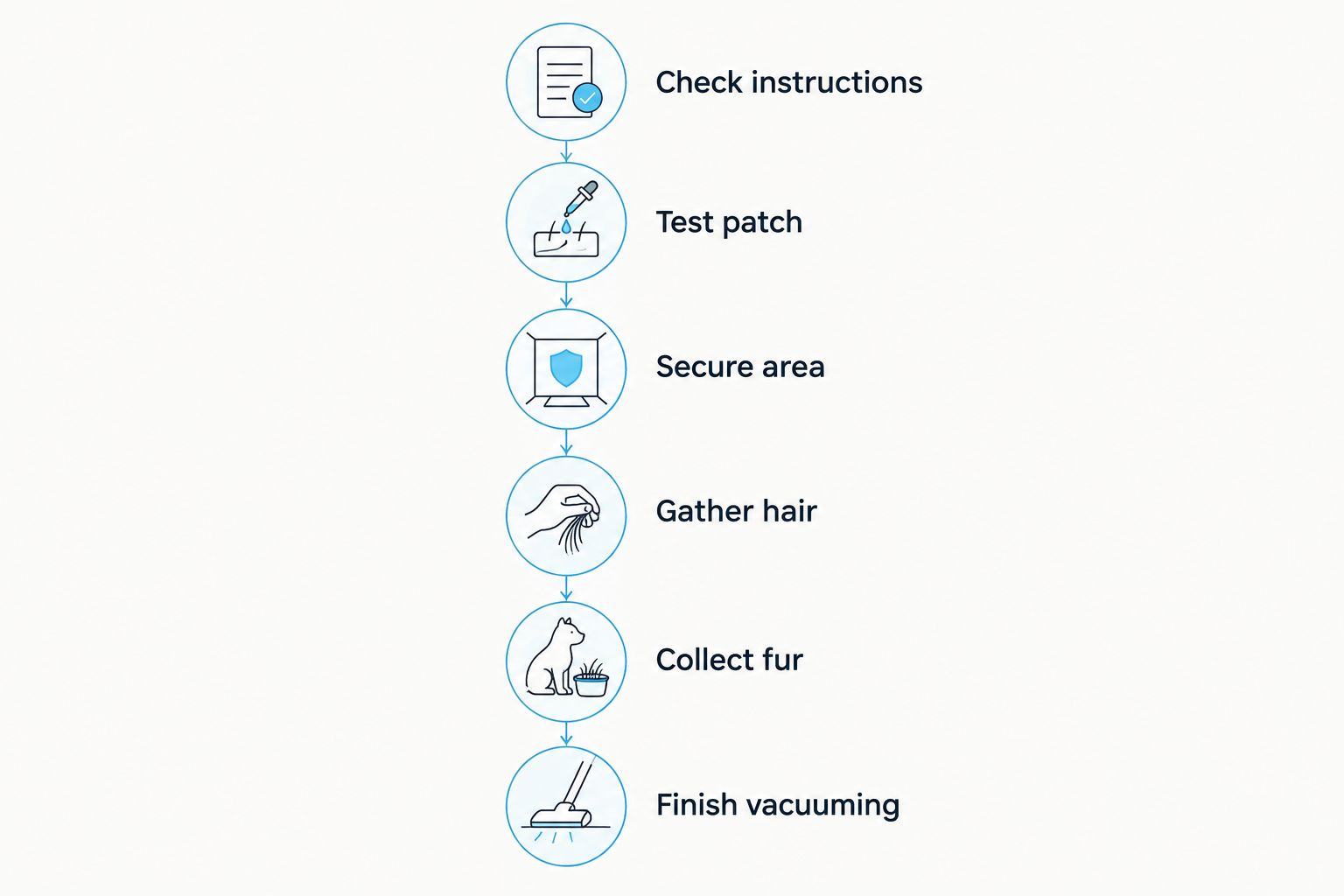
1. Check the carpet and broom instructions
Confirm that the tool is intended for carpet and that its head is suitable for your carpet construction. A tool described as a floor broom is not automatically appropriate for every rug or fitted carpet.
Pay particular attention to looped fibers, fringe, loose threads, and existing wear. If the carpet instructions prohibit brushing or scraping, follow those restrictions rather than trying a gentler version of the prohibited method.
2. Test a hidden patch
Choose an inconspicuous area and make a few light strokes in the direction permitted by the care instructions. Inspect the patch before moving to the main walking area.
Look for pulled loops, loose fibers, fuzzing, or a lasting change in texture. A patch that produces carpet fibers rather than pet hair is a reason to stop, not a sign that the tool is cleaning deeply.
3. Secure the cleaning area
Move small objects and keep pets away from the working patch. If you are cleaning a loose rug, make sure it stays flat rather than sliding or folding under the broom.
Do not drag a head across fringe or a damaged edge. Clean accessible carpet first and handle delicate edges according to their own care instructions.
4. Gather hair with light strokes
Work across a manageable patch using controlled strokes. Let the head contact the pile without leaning your body weight onto the handle.
Watch what happens. Continue only while hair gathers and the carpet remains undisturbed; stop if the head catches, the rug shifts, or you need increasing force to move it.
5. Collect the loosened fur
Pick up gathered clumps before sweeping the next patch. Remove hair caught on the broom head so you are not carrying it back across the carpet.
Keep discarded fur away from curious pets. Brushing it into a pile is only an intermediate step—the hair still needs to leave the floor.
6. Finish with routine vacuuming
Vacuum using the settings and attachments recommended for your carpet. The broom addresses visible hair, while vacuuming remains part of ordinary carpet care.
Check the vacuum’s brush and attachments afterward, following its instructions before removing tangled hair. Do not reach into a powered cleaning head.
Which carpet types need extra caution?
Carpet construction matters more than how much fur you can see. A dense patch of hair does not justify stronger pressure, and a tool that works on one rug does not automatically suit another.
Low-pile carpet: watch the surface
Shorter pile makes it easier to see whether hair is gathering at the surface. That visibility helps you monitor the cleaning, but it does not establish that a particular broom is compatible.
Check for fuzzing as you work. Stop if the surface starts looking rougher, even when the tool also collects fur.
Deep-pile carpet: avoid forcing the head
Longer fibers can make it harder to see what the head is catching. Work gently and do not force the tool through resistance.
If you cannot move the broom without tugging the pile, choose a cleaning method permitted by the carpet maker instead. More pressure is not a substitute for a suitable tool.
Looped or delicate carpet: check before brushing
Heads with hooks, teeth, or scraping edges deserve particular caution around loops and loose threads. Do not assume that a tool advertised for pet hair is suitable for delicate textiles.
For valuable rugs or uncertain materials, get cleaning guidance from the rug maker or a qualified rug-care professional. Preserving the textile comes before removing the last visible hair.
Why does pet hair broom performance vary?
In 2026, the useful buying questions remain practical: what touches your carpet, how easily you control it, and what its instructions permit. These factors explain why the same cleaning approach does not give identical results everywhere:
- Carpet construction: Pile length, loops, and the condition of the fibers affect how a head moves across the surface.
- Head design: Flexible bristles, rigid teeth, and scraping edges contact carpet differently; they are not interchangeable.
- Hair location: Loose hair on top of the pile presents a different task from hair caught among the fibers.
- Technique: Pressure, stroke direction, and repeated brushing change how much stress you put on the carpet.
- Tool cleanliness: A head already wrapped in fur needs clearing before you continue gathering more.
Judge results by both sides of the task: hair removed and carpet condition afterward. An impressive clump is not a good result if the rug is left damaged.
What should you check before buying in 2026?
Choose for compatibility first, comfort second, and convenient care third. A practical broom needs to fit your carpet and your everyday routine, not just a demonstration.
Check these details in the actual product information:
- Permitted surfaces: Look for explicit carpet guidance and any restrictions on delicate materials.
- Head material: Identify what will touch the pile rather than relying on a general pet-hair claim.
- Handle design: Consider whether you can keep a relaxed posture and control the head without overreaching.
- Cleaning directions: Check how you remove trapped fur and whether the head tolerates rinsing.
- Storage needs: Make sure you have somewhere to keep the tool without bending or crushing its working edge.
Rusticrosemarket is a small, faith-driven general store; its pet-hair buying advice should help you choose a practical household tool, not promise a perfect result on every carpet. Compare the stated instructions with your own floor before deciding.
For 2026 shopping, treat missing compatibility information as a question to resolve. Do not interpret an attractive product photo as confirmation that a head is safe for your particular rug.
Should you broom before or after vacuuming?
Use the broom before the final vacuum pass when you need to gather visible fur. Collect the clumps first, then vacuum the carpet using its recommended settings.
If the carpet has loose crumbs or grit, address that debris before dragging a manual head across it. You do not need to broom every time you vacuum; add the step where it helps without disturbing the pile.
Can you use a pet hair removal broom on a wet carpet?
Do not add water unless both the carpet and broom instructions permit it. Moistening a surface is not a universal requirement for removing fur.
A head that can be washed is not automatically intended for use on damp carpet. Follow the instructions for cleaning the tool separately, and let a washed head dry as directed before storage or reuse.
How do you clean and store the broom?
Remove gathered hair after use and inspect the head for tangled threads or debris. Use the manufacturer’s method rather than pulling hard on flexible parts or cutting near the working surface.
If rinsing is permitted, follow the stated cleaning directions and allow the head to dry before putting it away. Do not assume that the handle, joints, and head all tolerate soaking simply because one component is washable.
Store the broom where its bristles or edge are not held bent against the floor. Before the next use, check for cracks, sharp damage, or anything caught on the head that might snag your carpet.
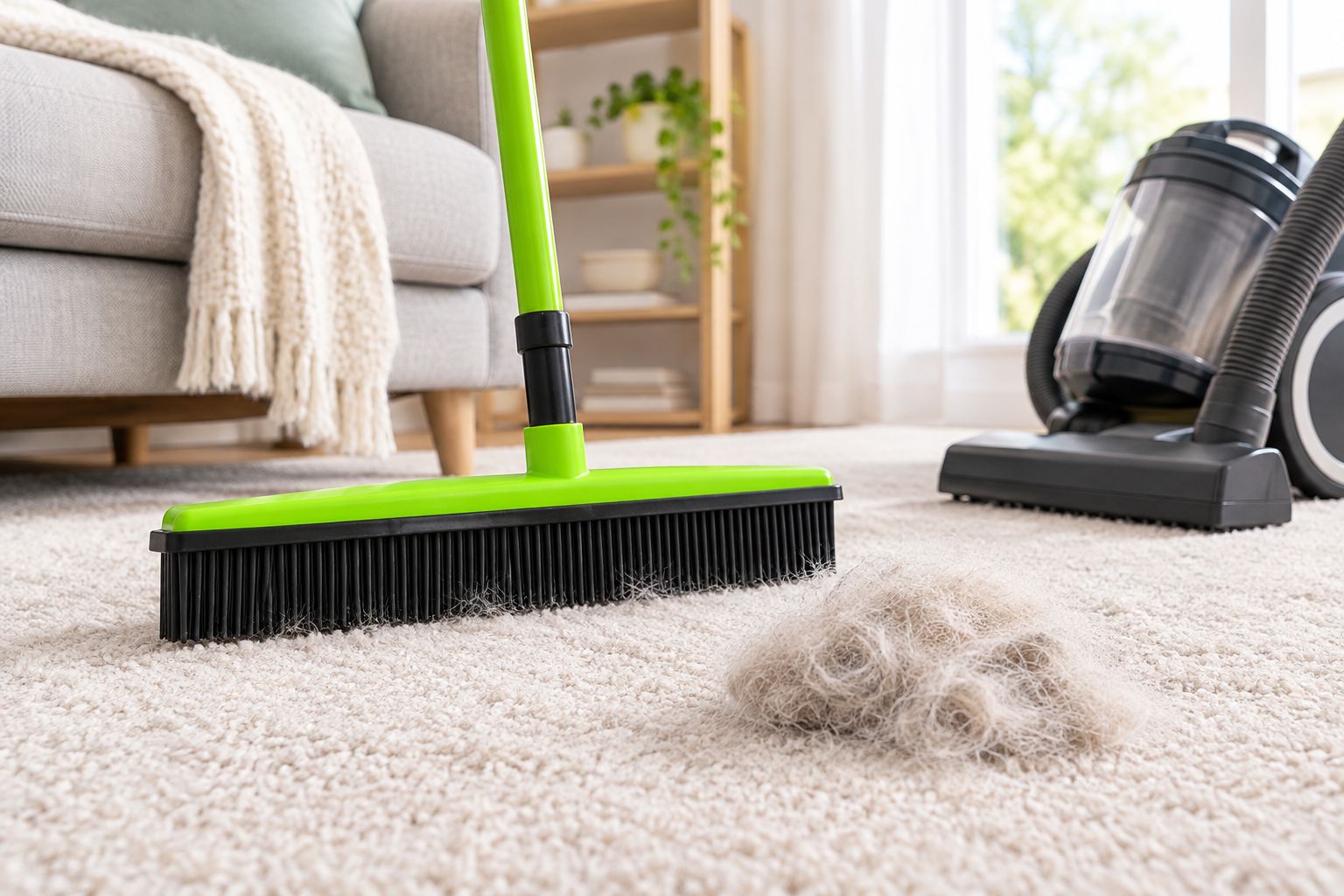
Cleaning and storage matter because the same head will touch your carpet again. A quick inspection keeps yesterday’s trapped thread or debris from becoming part of the next cleaning session.
FAQ
Does a pet hair removal broom for carpet actually work?
A pet hair removal broom for carpet can gather loose fur and loosen some caught hairs when its head suits the carpet. It does not replace vacuuming or guarantee removal of every embedded hair.
Is a pet hair broom better than a vacuum?
A pet hair broom is better suited to gathering visible fur into clumps, while a vacuum handles routine removal of loose dirt and debris. Use the tools for their different jobs rather than treating either as a universal replacement.
Can a rubber broom damage my carpet?
An unsuitable broom or excessive pressure can disturb carpet fibers. Check the carpet’s care instructions, test a hidden patch, and stop if you see snagging, pulled loops, or fuzzing.
Should I wet the broom to remove dog hair?
Do not wet the broom or carpet unless both sets of care instructions permit it. Permission to rinse a broom head does not mean it is intended for use on damp carpet.
Can I use the same broom on every rug?
Do not assume the same broom suits every rug. Check each rug’s material, construction, and care instructions before using the tool.
How often should I use a pet hair broom?
Use a pet hair broom when visible fur needs gathering and the carpet tolerates the method. Follow your carpet’s routine care guidance rather than imposing a fixed brushing schedule.
What should I look for when buying a carpet broom in 2026?
For a 2026 purchase, look for clear carpet compatibility, identifiable head material, manageable handling, and cleaning instructions. Avoid choosing solely from a demonstration showing a large pile of collected fur.
One last thing
Do not use the size of the fur pile as your only measure of success. Check what is in it: pet hair is the target, while pulled yarn or carpet fibers mean you should stop and reassess the tool.
Rusticrosemarket’s practical recommendation for 2026 is simple: test gently, collect what comes free, and finish with the carpet’s recommended cleaning method. A comfortable home does not require chasing every last strand at the expense of the rug.