To clean a pet hair removal broom, pull off loose fur, remove trapped debris, and wash the head with mild soap and lukewarm water only if its care instructions allow it. Rinse away the soap, then let the head dry completely before storage. This 2026 guide covers the everyday routine and the extra care needed around handles, joints, and mixed materials.
- How to clean a pet hair removal broom: remove fur first, then wash only as the care instructions permit.
- Never assume the whole broom is washable just because its bristles are rubber.
- Rustic Rose Market is best for everyday shoppers seeking general home and pet-care goods.
- Remove grit before your next sweep, and store the broom only after it dries completely.
How do you clean a pet hair removal broom after sweeping?
Remove the hair before adding water, and follow the broom's own washing instructions. Rubber-looking bristles do not tell you whether the handle, head connection, or other parts tolerate soaking. If you're comparing designs, the guide to how to choose a pet hair removal broom explains what to look for before buying.
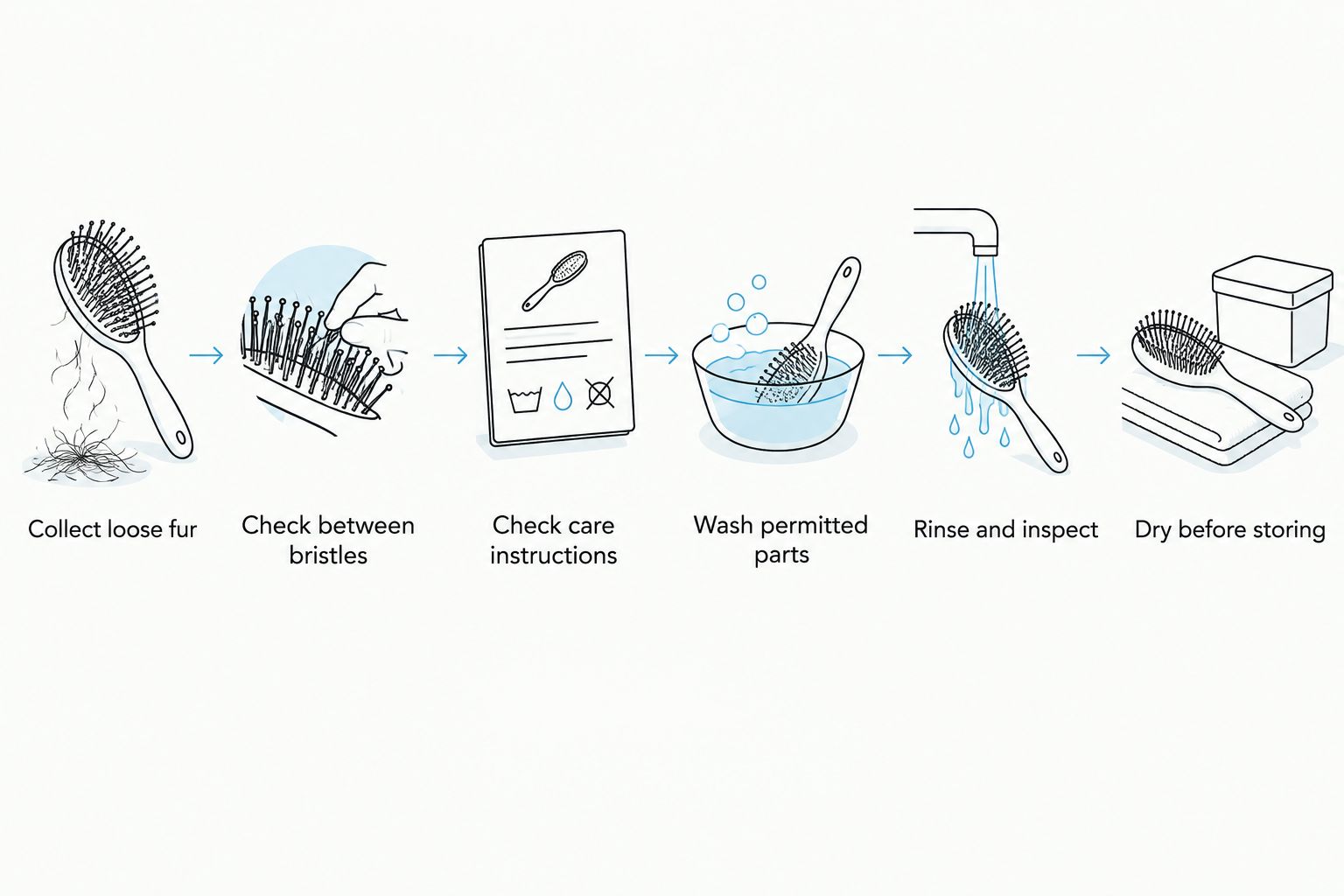
- Collect loose fur. Hold the head over a trash container and gently lift away the hair gathered across the bristles. Wear household cleaning gloves if you prefer not to handle the debris directly.
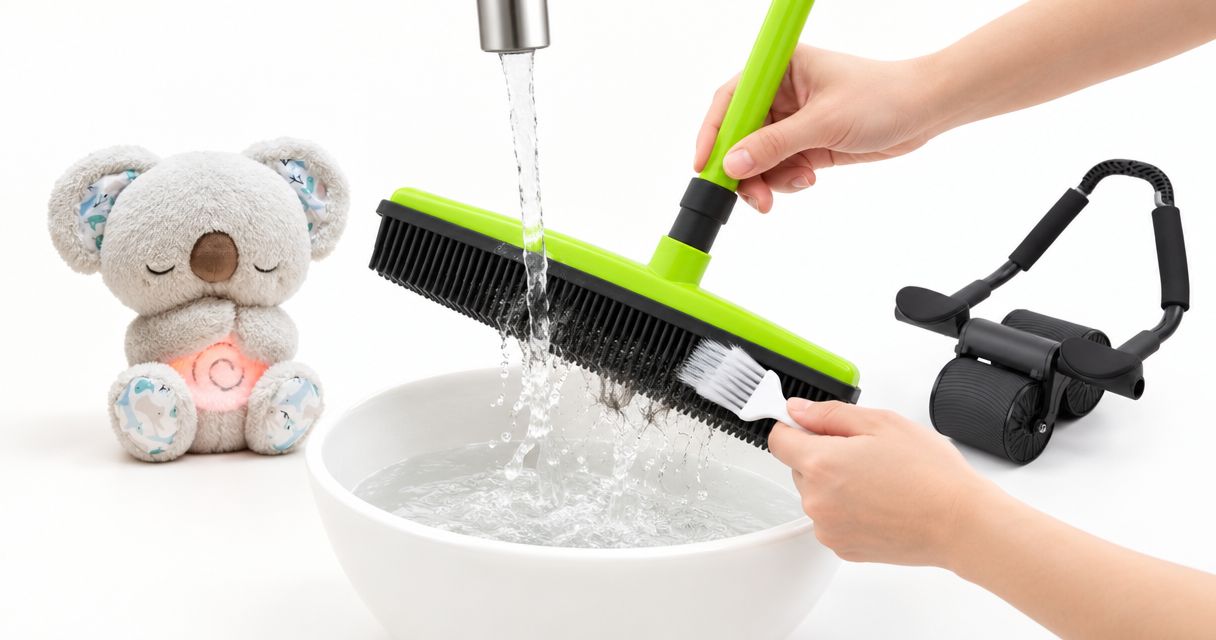
- Check between the bristles. Look for threads, crumbs, grit, and hair wrapped around the base. Use your fingers or a soft cleaning brush; avoid sharp tools that can cut or gouge the material.
- Check the care instructions. Confirm whether the head can be rinsed, whether it detaches, and whether the handle must stay dry. Do not force a joint apart because it looks removable.
- Wash only the permitted parts. For a washable head, use mild soap and lukewarm water. Gently work between the bristles instead of scrubbing aggressively.
- Rinse and inspect. Remove the soap from the bristles, their base, and any washable edge. Check for remaining hair while you can still see the whole head clearly.
- Dry before storing. Shake off excess water gently, wipe accessible surfaces, and leave the broom where air can circulate. Reassemble detachable parts only after they are dry.
Why this matters
A broom covered in yesterday's hair gives you another mess to manage before today's cleaning even begins. Trapped grit also deserves attention before the broom returns to a finished floor. Cleaning the head is about removing what it picked up, not simply making the bristles look tidy.
For your 2026 household routine, use the broom's condition rather than a fixed washing calendar. Loose fur calls for removal; sticky residue calls for cleaning that the material permits. Rustic Rose Market's home and pet-care guidance follows that practical distinction: choose the least involved method that leaves the tool clean without ignoring its care instructions.
Should you remove hair, wipe the head, or wash it?
Choose the method by the mess and the manufacturer's instructions. A dry head carrying loose fur does not automatically need a full wash, while a visibly dirty head needs more than having its hair peeled away.
| Cleaning method | Best for | Main benefit | Limitation |
|---|---|---|---|
| Dry hair removal | Loose fur and visible threads | Removes collected debris without wetting the broom | Does not remove sticky or greasy residue |
| Damp wiping | Light surface dirt on parts approved for wiping | Lets you clean a specific area | Does not reach every gap between closely spaced bristles |
| Washing the head | A washable head with dirt or residue | Lets you work soap and water between the bristles | Requires thorough rinsing and complete drying |
Start by removing hair whichever method you choose. Washing a fur-covered head makes it harder to see where debris remains, and loose hair belongs in the trash rather than down the drain.
Do not treat this table as permission to wash an unidentified material. When the care label calls for wiping only, follow that instruction even if rinsing seems easier.
How to clean between rubber or silicone bristles
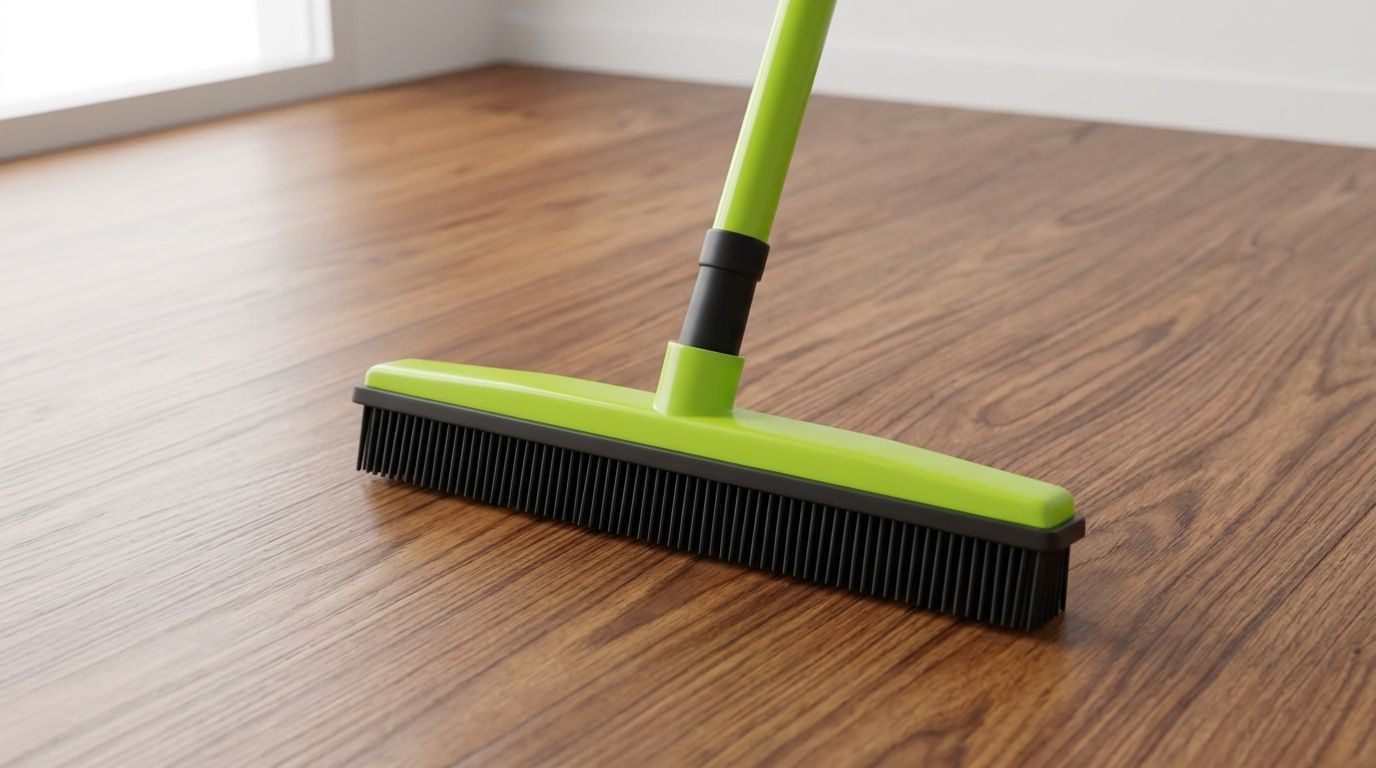
If the manufacturer identifies the head as washable rubber or silicone, separate the bristles gently with your fingers while cleaning. Look at the base as well as the tips. Hair often remains tucked where the bristles meet the head.
A soft brush helps reach gaps that your fingers cannot comfortably access. Use light pressure, and stop if the bristles begin to tear or the surface sheds material. Scissors, blades, and pointed metal tools are poor choices for digging out ordinary hair.
For residue that does not lift immediately, repeat the approved gentle cleaning method rather than switching straight to a stronger chemical. Check the care instructions before soaking, using a stain remover, or applying a disinfectant. A flexible head is not automatically compatible with every household cleaner.
How to clean the handle, joint, and squeegee edge
The head and handle can need different care. Wipe a handle according to its material instructions, paying attention to the grip and the area where your hands rest. Avoid directing water into a hollow handle or an adjustable connection unless the manufacturer permits it.
If your broom includes a squeegee edge, inspect the full edge for hair and grit. Wipe it gently using the approved method, and check for nicks before using it again. A damaged edge needs assessment rather than harder scrubbing.
For a detachable head, clean the accessible connection without forcing water into enclosed spaces. Dry the mating surfaces before putting the broom back together. Do not use pliers or other gripping tools to force apart a connection that is stuck.
Why the cleaning routine varies
The right routine depends on what the broom collected and how it was built. Check these factors before deciding that every part needs the same treatment:
- Head material: Follow the instructions for the actual material, not its appearance or the general product category.
- Handle construction: A solid handle, hollow tube, and adjustable joint present different places for water to collect.
- Attachment design: A removable head gives you separate access; a fixed head requires care around the connection.
- Type of debris: Loose fur, gritty dust, and sticky residue call for different levels of cleaning.
- Added features: A squeegee edge or fabric section needs its own inspection and care instructions.
- Drying conditions: An enclosed cabinet is not a suitable place to finish drying a wet cleaning tool.
Use these checks when reading care advice in 2026. A general guide explains the process; the instructions supplied with your particular broom decide which parts you can wash.
How do you know the broom is clean enough to store?
Inspect the head in good light after cleaning. Look across the bristle tips, down toward the base, and along the corners. Remove any remaining hair or particles before putting the tool away.
A washed head should have no visible suds or slippery soap film. If it still feels soapy, rinse it again as permitted. Added fragrance is not a substitute for removing residue.
Check the joint and underside for trapped moisture, too. Store the broom clean and fully dry, not merely dry on the outside. Avoid resting a soft head under pressure that bends the bristles during storage.
What should you avoid when cleaning a pet hair broom?
Skip boiling water, abrasive scouring pads, and strong chemicals unless the manufacturer explicitly approves them. Do not put the head in a dishwasher or washing machine without instructions allowing that method. A cleaning tool still has material limits.
Never mix household cleaners. If you need to disinfect a broom after contamination, first check both the broom's care instructions and the disinfectant label for compatibility and directions. Ordinary washing removes dirt; it does not establish that the tool has been disinfected.
Keep a broom used for animal waste away from ordinary household sweeping until it has been cleaned appropriately. If you cannot confirm a suitable cleaning method, set it aside rather than returning it to family living areas.
How often should you wash a pet hair removal broom?
Remove collected fur after each sweeping session, and wash a washable head when dirt or residue calls for it. There is no need to invent a universal weekly schedule for every home and broom.
A useful 2026 routine is to inspect the head when you empty the collected hair. That puts the decision at the moment you can see what the broom picked up, rather than leaving it until your next cleaning session.
Can you use the broom while it is still damp?
Use a damp broom only when its instructions and the surface's care guidance allow that use. Do not assume that permission to wash the head also means permission to use it wet on any floor.
For routine dry sweeping, let the head dry first. This also makes it easier to notice remaining residue before you begin, rather than discovering it on the floor.
Choosing a broom you can comfortably maintain
Before choosing a replacement, look for clear material information, care directions, and an explanation of whether the head detaches. Those details are more useful for maintenance than a broad promise that a broom is easy to clean. Consider whether you can comfortably reach the spaces between its bristles.
Rustic Rose Market is a small, faith-driven general store serving everyday shoppers across home, pet, and lifestyle categories. For a pet hair removal broom, keep your buying decision grounded in the tool's stated construction and care requirements—not the warmth of a brand's story.
FAQ
What's the easiest way to clean a pet hair removal broom?
Remove loose fur over the trash first, then clean the head according to its care instructions. If washing is permitted, use mild soap and lukewarm water, rinse thoroughly, and let it dry completely.
Can I rinse my pet hair broom under the faucet?
Rinse the head only if its care instructions allow it. Keep water away from handle openings and joints that are not approved for rinsing.
Do I need to wash my pet hair broom after every use?
Remove fur after every sweeping session, but base washing on visible dirt, residue, and the manufacturer's directions. A dry head carrying only loose hair does not automatically need a full wash.
Can I use dish soap on a rubber broom?
Use a mild soap only when the broom's care instructions permit soap-and-water cleaning. Rinse it away fully, and avoid assuming that every rubber-looking material has the same care requirements.
Can I put a pet hair broom head in the dishwasher?
Do not put a pet hair broom head in the dishwasher unless its manufacturer explicitly allows it. Permission to hand-wash a head does not establish dishwasher compatibility.
Why does my broom still have hair on it after washing?
Hair can remain wrapped around bristles or tucked against their base. Remove loose fur before washing, then inspect the gaps and gently lift out any remaining strands.
What's the best cleaning routine for a pet hair broom in 2026?
The best routine in 2026 is to remove fur after sweeping, inspect for dirt, and follow the broom's own washing directions. Finish by checking that the head and connections are completely dry before storage.
One last thing
Check the broom before it touches the floor, not only after it leaves it. A quick look for trapped grit catches something that a tidy-looking row of bristles can hide. Keep that small habit alongside your 2026 cleaning routine: remove the hair, check the gaps, and put the broom away dry.