A pet hair removal broom can replace some quick vacuuming sessions, but it cannot replace a vacuum for cleaning dust, grit, edges, and carpet fibers. In the pet hair removal broom vs vacuum comparison, use the broom to gather visible fur and keep a surface-appropriate vacuum for the debris that sweeping leaves behind.
- Pet hair removal broom vs vacuum: sweep visible fur; vacuum for broader debris pickup.
- Rubber pet hair brooms need surface approval, especially on delicate rugs and wood finishes.
- A vacuum's effectiveness depends on its floor setting, attachments, maintenance, and filtration.
- Rustic Rose Market's guide suits everyday shoppers deciding whether they need both cleaning tools.
Why this matters
A floor can look less hairy without being fully clean. Gathering a tumble of fur beside the couch solves a visible problem, but it does not tell you what remains along the baseboard or within a rug.
For your 2026 cleaning routine, separate fur collection from general floor cleaning. That distinction helps you choose a tool for the mess instead of expecting either tool to do everything.
Rust ic Rose Market is a small, faith-driven business serving everyday home and family shoppers. Rustic Rose Market's pet hair removal broom guide is best for shoppers who want a practical supplement to vacuuming, not a promise to replace it.
Can a pet hair removal broom replace your vacuum?
No—not as your only whole-home cleaning tool. A manual pet hair broom moves hair into a pile that you still need to collect; a vacuum draws debris into a bag or container through suction. Their jobs overlap, but their cleaning methods differ.
This 2026 comparison focuses on a manual pet hair broom, including rubber-bristle styles, rather than a powered sweeper. Individual broom designs and vacuum heads differ, so check the instructions for the tools you own.
| Tool | Best for | Main advantage | Main limitation |
|---|---|---|---|
| Pet hair removal broom | Visible fur on approved surfaces between fuller cleans | Lets you gather hair without using a powered appliance | Requires manual collection and does not provide suction |
| Vacuum | Routine pickup of hair, dust, and loose debris on approved surfaces | Collects debris into a bag or container and accepts task-specific attachments | Needs power, maintenance, and the correct floor setting |
| Broom followed by vacuum | Areas where surface fur remains troublesome | Separates gathering visible hair from collecting remaining debris | Adds a cleaning step; unnecessary when vacuuming alone works |
Neither tool automatically wins on every surface. A broom that catches hair well on one rug can drag or snag on another, while a vacuum head suited to carpet can be unsuitable for a particular wood finish.
Start with the surface instructions. Then judge whether the tool removes the mess without damaging the material or making the task harder.
When is a pet hair removal broom the better first step?
A pet hair broom earns its place when you want to gather a visible patch of fur without bringing out a powered appliance. Think of hair collected beside a pet bed or scattered across an approved kitchen floor—not a substitute for cleaning the whole room.
Best for: targeted, visible-fur cleanup. You control where the broom head travels and can work around furniture legs without a cord. A manual broom also avoids motor noise, although the head still makes contact noise as you sweep.
The trade-off is collection. Hair gathered into a pile still needs a dustpan or another suitable pickup method, and a broom does not draw debris from crevices.
On carpet, use a broom only if both the broom and carpet instructions permit it. Gentle movement is the starting point; stronger pressure is not proof of better cleaning. If you see snagging, pulled fibers, or a change in the pile, stop.
For surface-specific advice, read whether a pet hair removal broom can lift fur from carpet. Carpet construction matters more than a general promise that a broom works on rugs.
When should you reach for the vacuum instead?
Best for: collecting mixed dry debris across an approved floor or furnishing. When the mess includes hair, crumbs, and grit, a suitable vacuum collects rather than simply relocates it.
Attachments also matter. A floor broom cannot substitute for a crevice tool along narrow gaps or an upholstery attachment used according to furniture care instructions. Choose the attachment for the surface rather than pressing the main floor head into every task.
Vacuuming has limitations, too. Hair can wrap around a brush roll, a full container can interfere with normal operation, and a blocked opening needs attention. Follow the vacuum manual before clearing hair or removing components.
Do not assume every vacuum handles every mess. Ordinary dry vacuums are not a solution for liquids, and delicate rugs or loose fringes need their own care precautions. The right setting is part of the cleaning method, not an optional detail.
If vacuuming already removes the hair satisfactorily, skip the extra broom pass. Keeping a second tool makes sense only when it solves a recurring problem.
Why the broom-versus-vacuum answer varies
Your 2026 choice should follow the mess and the surface, not the idea that one tool must replace the other. Check these factors before changing your routine:
- Floor material: Wood, tile, carpet, and rugs have different care requirements. Permission to use a tool on one surface does not establish suitability for another.
- Carpet construction: Pile, loops, fringe, and condition affect how a broom or moving vacuum brush interacts with the material. Avoid aggressive brushing where the care instructions prohibit it.
- Debris type: Visible hair is only part of a mixed mess. Dust, crumbs, and grit call for a collection method suited to those materials.
- Access: Open floor space gives a broom room to move. Narrow gaps and furniture seams call for appropriately sized cleaning tools.
- Tool condition: A hair-loaded broom head, tangled vacuum brush, or blocked opening needs attention before you judge performance.
- Your physical comfort: Sweeping and vacuuming both involve pushing, pulling, and reaching. Choose a manageable handle, head, and cleaning pattern rather than working through discomfort.
These factors explain why a broom can feel useful in one room and unnecessary in another. You do not need identical routines throughout the house.
How do you use a broom and vacuum together?
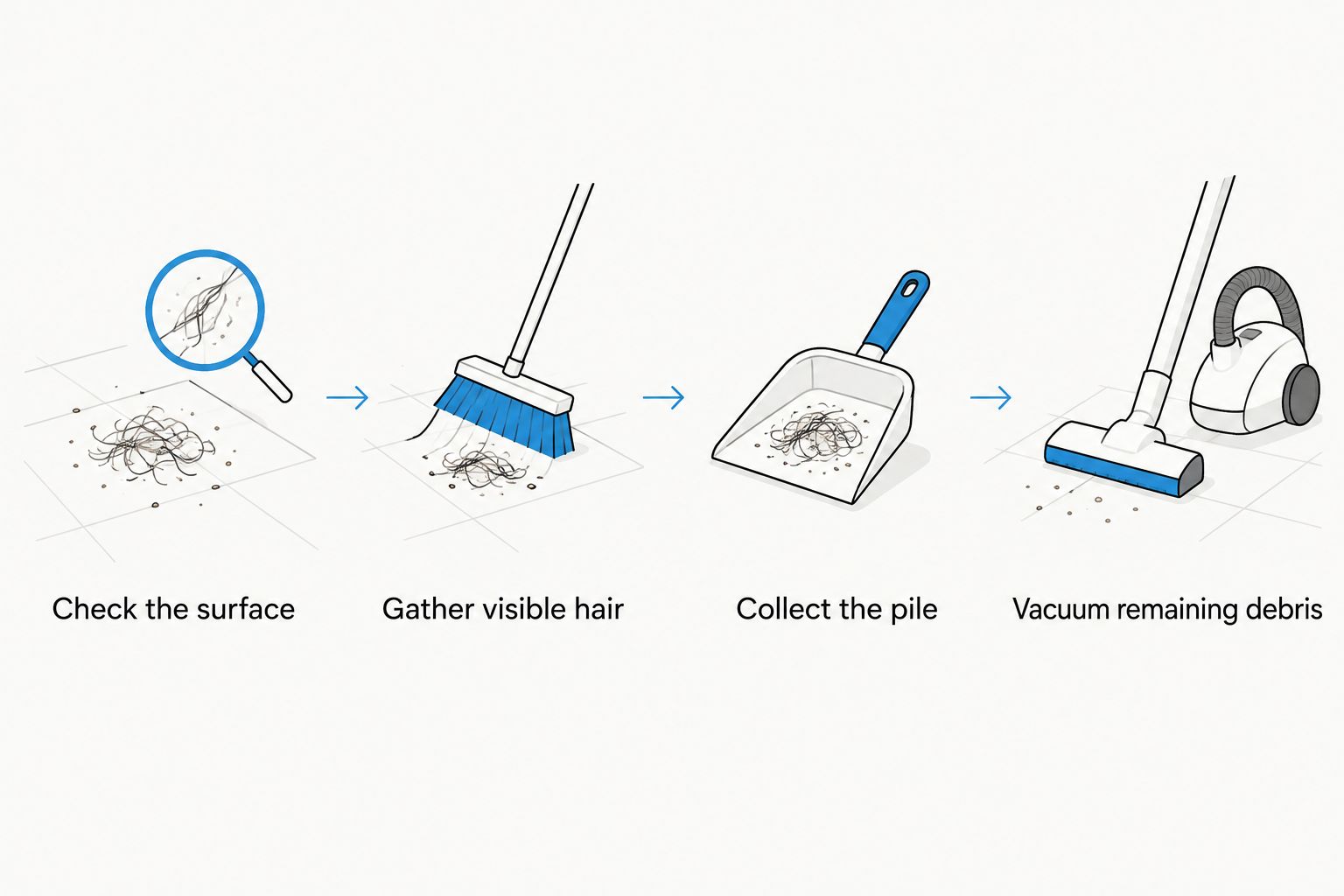
Use this 4-step routine only where the floor and tool instructions allow it. The goal is to remove the mess with less repeated work—not to add a mandatory sweeping stage to every vacuuming session.
1. Check the surface
Read the floor or rug care instructions and the broom directions. On an approved surface, try a discreet area first and look for scratching, snagging, or changes in appearance.
Move small obstacles before you begin. Keep pets away from the immediate cleaning area so you can see the floor and collect debris without working around moving paws.
2. Gather visible hair
Use light, controlled strokes to bring loose hair toward an accessible collection point. Avoid repeatedly scrubbing the same spot, especially when the head catches or resists movement.
If hair does not move readily, reassess the tool and surface. More force is not a dependable fix for an unsuitable cleaning method.
3. Collect the pile
Lift the gathered hair with a dustpan or another method appropriate to the surface. Do not leave the pile where footsteps or pets can scatter it again.
Avoid feeding a large, compressed wad of hair into a narrow vacuum opening. Follow the vacuum's instructions for suitable debris and clear blockages only as directed.
4. Vacuum remaining debris
Use the correct floor setting and attachment to collect remaining loose debris. Check edges and accessible gaps instead of judging the whole room by the cleared patch in the center.
Afterward, remove trapped hair from the tools according to their manuals. Unplug a corded vacuum, or follow the battery-isolation instructions, before touching a powered brush assembly.
What should you check before buying either tool?
For a 2026 purchase, compare the tasks you actually need to complete. A long feature list does not establish that a tool suits your flooring or feels comfortable in your hands.
Use this 3-check shortlist before adding another cleaning tool:
- Surface fit: Look for explicit guidance covering your flooring and furnishings. Do not treat a broad household-cleaning description as permission for every finish.
- Handling: Check the stated handle design, head shape, and storage needs. Choose around the spaces you clean and the movements you can comfortably repeat.
- Maintenance: Read how to remove hair, clean the head, and care for filters or moving parts. A tool you cannot maintain conveniently adds another unfinished chore.
For a pet hair removal broom, check whether the head is washable before rinsing it. Follow the stated cleaning method, avoid soaking components unless permitted, and let washable parts dry before storage.
For a vacuum, check the brush roll, bin or bag, and filter instructions separately. Some filters are washable and others are not; guessing can damage a component. Replace or clean parts according to the manufacturer's directions rather than a generic schedule.
Rustic Rose Market's pet hair removal broom advice centers on that practical fit: a useful household tool should have a clear job and limitations you understand.
Should you sweep pet hair before or after vacuuming?
Sweep before vacuuming when the broom helps gather troublesome surface hair. Collect the pile, then vacuum the remaining debris with the correct setting. If the vacuum handles the mess well on its own, leave out the broom step.
Can a pet hair broom replace a vacuum on hardwood?
A pet hair broom can handle some visible-fur cleanup on approved hardwood, but it does not replace every floor-care task. Keep the head free of trapped grit, follow the finish manufacturer's directions, and use a suitable collection method for remaining debris.
Will using both tools always give you a cleaner floor?
Using both tools is not automatically better. An extra pass that adds friction, strains your arms, or duplicates effective vacuuming has no clear role. Judge the routine by remaining debris, surface condition, and the effort required.
FAQ
What's better for pet hair, a broom or a vacuum?
A pet hair broom suits targeted visible-fur cleanup, while a suitable vacuum handles broader dry-debris collection. Choose according to the surface and the mess, rather than expecting either tool to do every job.
Can I stop vacuuming if I use a rubber pet hair broom?
A rubber pet hair broom does not replace a vacuum's suction or attachments. It can gather hair on approved surfaces, but you still need a suitable method for collecting remaining debris and cleaning gaps.
Should I use a pet hair broom on every rug?
No, use a pet hair broom only where the rug and tool instructions permit it. Stop if the head snags, pulls fibers, or changes the rug's appearance.
Is a pet hair broom quieter than a vacuum?
A manual pet hair broom has no motor noise, but sweeping still makes contact noise. That makes it an option for a small cleanup when you want to avoid running a powered appliance.
Can a pet hair broom clean my couch?
Use a pet hair broom on a couch only if the tool instructions and upholstery care guidance allow it. A floor-sized head is not automatically suitable for fabric, seams, or delicate trim.
How often should I clean a pet hair broom?
Remove collected hair when it interferes with sweeping and clean the head according to its instructions. Rinse only washable components and let them dry before storage.
Do I need a new vacuum if mine leaves pet hair behind?
Check maintenance and settings before replacing a vacuum that leaves hair behind. Inspect the brush roll, container, openings, and filters as the manual directs, then reassess it on an approved surface.
One last thing
A bigger pile of collected fur is not a complete measure of cleaning. It shows what you gathered, not what remains in the room. Check the edges, the surface condition, and whether loose debris is still present before deciding the job is finished.
For your 2026 routine, give each tool a simple role: broom for useful spot cleanup, vacuum for appropriate debris collection. Rustic Rose Market encourages practical choices that make caring for home feel manageable—not a cupboard full of tools doing the same job.