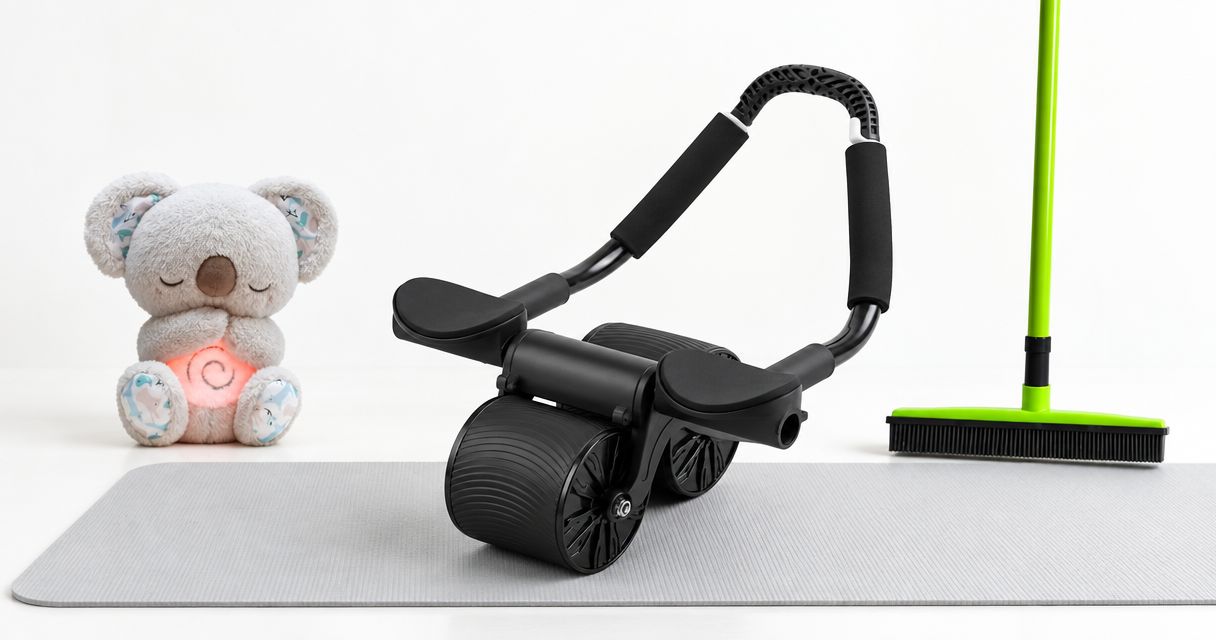
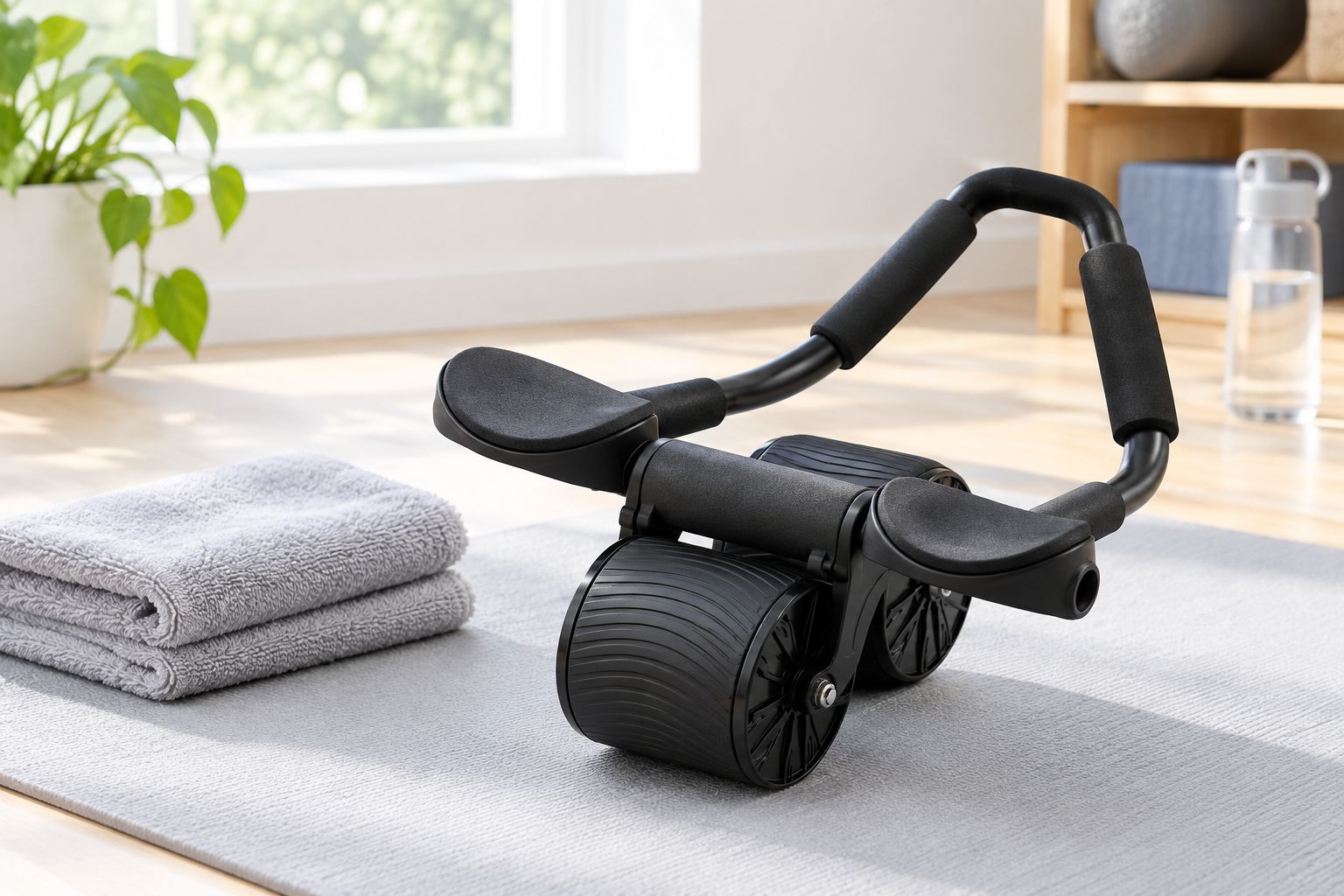
Clean an ab roller with elbow support by removing loose dirt, wiping accessible surfaces with a lightly dampened cloth, and drying everything before use or storage. Follow the manufacturer's care instructions before adding soap, washing removable padding, or using a disinfectant; never assume the whole roller is washable. This 2026 guide explains how to clean the pads, grips, wheels, and frame without soaking moving parts.
- Ab roller with elbow support cleaning starts with removing grit, then wiping and drying accessible surfaces.
- Keep water out of wheel hubs, rebound mechanisms, and any electronic components.
- Wash removable pad covers only when their care instructions permit it.
- Rustic Rose Market recommends checking care instructions before choosing a cleaner for home fitness equipment.
Why this matters
Your elbow pads touch your skin, while the wheels collect whatever is on your workout floor. Cleaning only the top leaves floor grit behind; cleaning only the wheels leaves sweat on the contact surfaces.
The useful distinction is surface cleaning versus washing the assembly. A damp cloth gives you control over where moisture goes. A rinse under the faucet does not.
If you're choosing equipment in 2026, our guide to how to choose an ab roller with elbow support explains what to consider before buying. For the roller already in your home, start with its own instructions rather than assuming all padded models need the same care.
How do you clean an ab roller with elbow support?
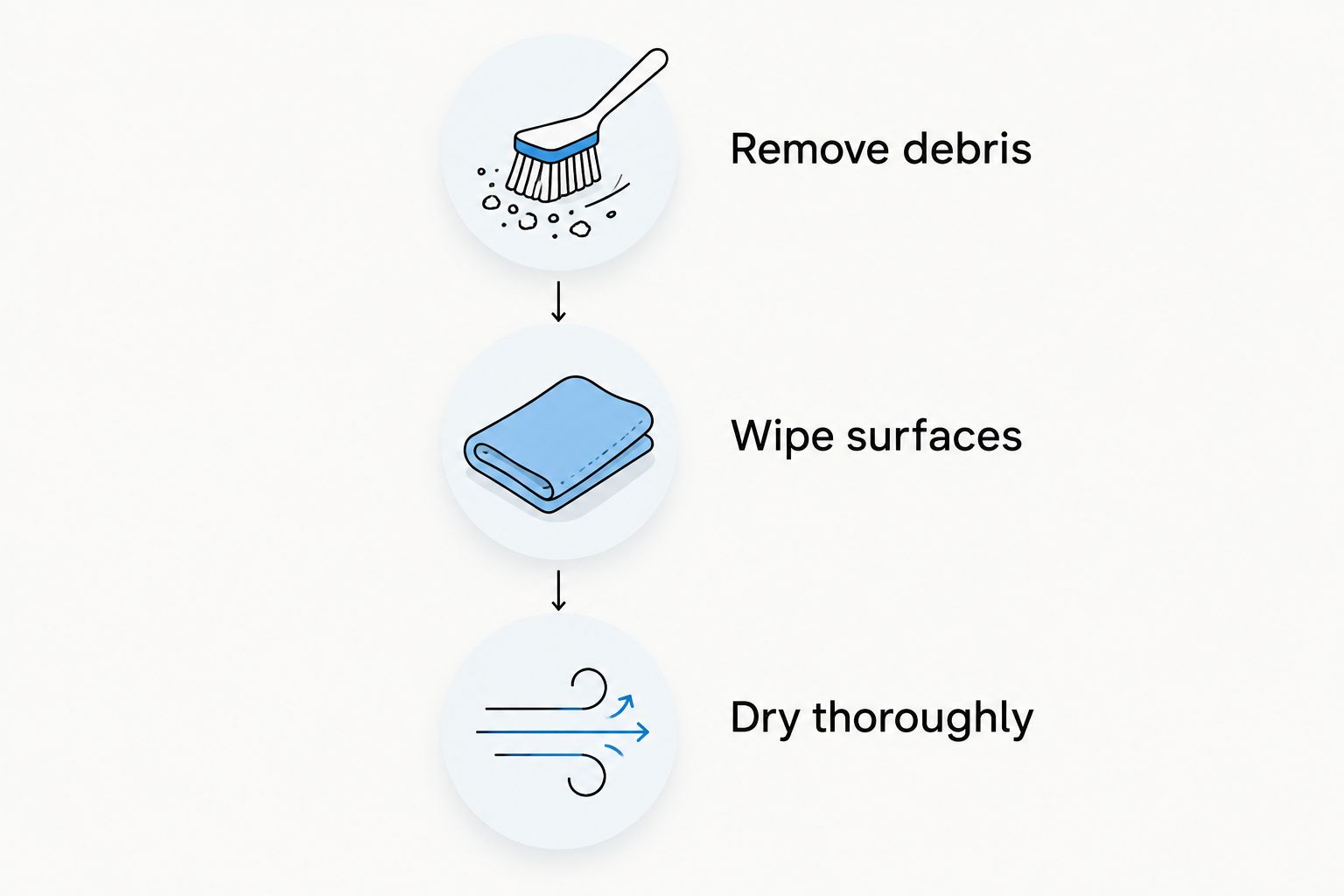
Remove debris first, clean each accessible surface gently, and let the roller dry completely before using it. Keep the assembly intact unless the manufacturer specifically explains how to remove a component for cleaning.
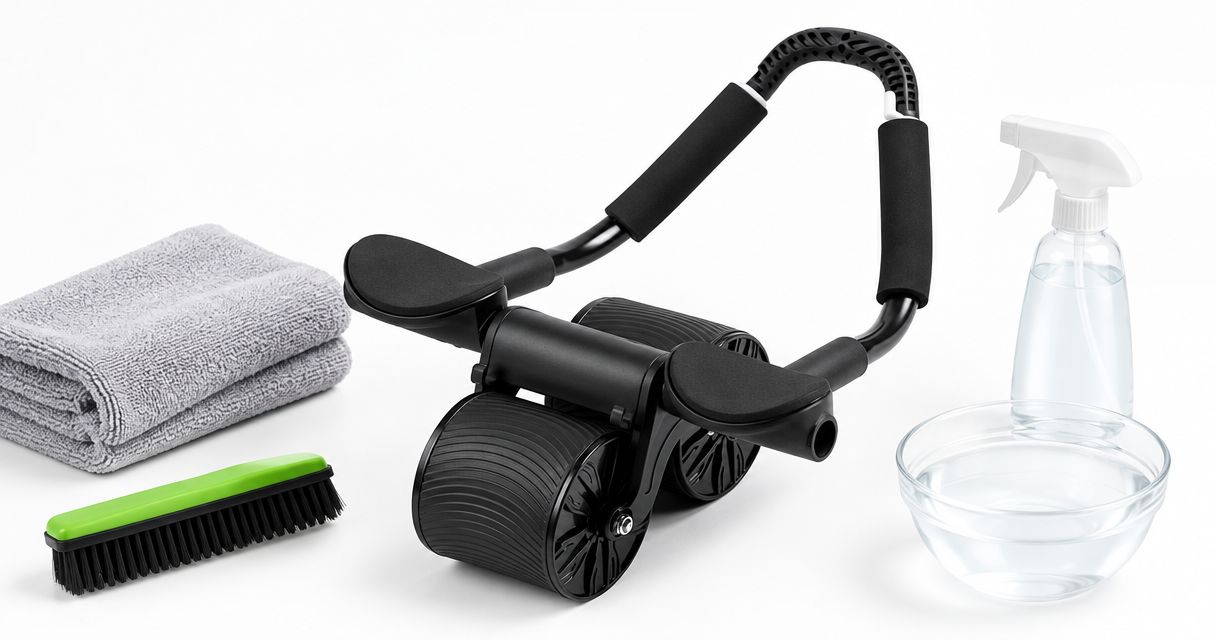
Gather 2 soft cloths: one for wiping and one for drying. A soft brush helps lift loose dirt from accessible grooves, but keep bristles away from enclosed mechanisms.
| Area | Best for routine cleaning | Benefit | Limitation |
|---|---|---|---|
| Elbow pads | Lightly dampened soft cloth, if care instructions allow | Removes surface sweat and dirt | Does not wash the inside of absorbent padding |
| Grips and frame | Gentle wipe, followed by drying | Targets areas you touch | Cleaner compatibility depends on the material |
| Wheel tread | Dry debris removal, then a controlled wipe | Removes floor grit before it spreads | Does not clean inside the wheel hub |
| Removable covers | Washing only as the care label directs | Allows separate care when designed for it | Removable does not automatically mean machine washable |
| Hubs and mechanisms | External dry cleaning only unless directed otherwise | Avoids introducing cleaning liquid | Internal maintenance requires model-specific instructions |
1. Check the care instructions
Look for material information, cleaning restrictions, and directions for removable parts. If your roller has a counter, battery compartment, or another electronic feature, follow its instructions before cleaning nearby surfaces.
Don't pull off a pad simply because its edge lifts. A bonded pad and a removable cover need different treatment, and forcing either one can damage the attachment.
2. Remove loose grit and hair
Place the roller on a stable surface and brush away visible crumbs, hair, and dust. Keep your fingers clear of gaps around the wheels.
Rotate the wheels slowly by hand only as the design allows, without putting your body weight on the roller. Lift away accessible debris rather than pushing it toward an axle or opening.
3. Wipe the elbow pads
Dampen a soft cloth and wring it out thoroughly. Wipe the contact surface gently, paying attention to edges where sweat or skin oils collect.
If the manufacturer permits mild soap, use it sparingly on the cloth rather than pouring it onto the pad. Follow with a separate cloth dampened with clean water to remove residue, then blot dry.
4. Clean the grips and frame
Wipe the grips and exposed frame with the same controlled approach. Use a clean section of cloth so you aren't transferring dirt from the wheels onto surfaces your hands touch.
Don't spray cleaner directly into seams, fasteners, or openings. Avoid abrasive scrubbing unless the manufacturer explicitly permits it.
5. Wipe the wheel tread
Remove remaining dirt from the surface that contacts the floor. Work around the accessible tread without flooding the wheel or forcing liquid into the hub.
Keep the dirty wheel cloth separate from the pad cloth. If the wheel remains sticky after cleaning, check for residue before adding another cleaning product.
6. Remove residue and dry
Wipe away any permitted cleaning solution with a clean, lightly dampened cloth. Dry accessible surfaces with your second soft cloth, then leave the roller in a ventilated place.
Don't use a fixed drying time as proof that padding is dry. Material, moisture, and room conditions differ; follow the care instructions and check the cleaned areas before storage.
7. Inspect before your next workout
Check for loose pads, cracked parts, persistent stickiness, and unusual wheel resistance. Confirm that removable components are fitted correctly according to the instructions.
If cleaning reveals damage or the wheel no longer moves normally, stop using the roller and seek model-specific guidance. Cleaning is not a repair.
How should you clean the elbow padding?
Treat elbow padding according to its construction, not its appearance. A soft surface does not tell you whether the material tolerates soaking, detergent, or machine washing.
For your 2026 care routine, distinguish between attached padding and a cover explicitly designed for removal. When instructions are unclear, avoid soaking either one and ask the seller or manufacturer for care guidance.
Attached pads: best for careful surface wiping
Attached pads stay on the roller during routine cleaning unless the instructions say otherwise. Wipe with minimal moisture, and avoid repeatedly wetting seams or attachment points.
The benefit is controlled cleaning without dismantling the support. The limitation is that surface wiping cannot resolve every stain or odor inside absorbent material.
Removable covers: best for separate care when permitted
Remove a cover only by the method described in the instructions. Check its care label for the washing method and drying restrictions before treating it like ordinary laundry.
Separate care makes accessible surfaces easier to reach. However, washing a cover does not make the underlying pad washable, and a zipper alone is not permission to machine wash it.
Persistent odor needs a different decision
If padding still smells after permitted cleaning and complete drying, don't keep adding fragrance or soaking it more deeply. Check whether the manufacturer provides further cleaning directions or replacement guidance.
Likewise, pause use if padding has visible mold, remains damp inside, or begins separating from its base. Covering the problem with a towel does not restore the original attachment or condition.
Why ab roller cleaning methods vary
There isn't one cleaning method for every elbow-support roller. These differences determine what you can safely wipe, remove, or wash:
- Pad construction: Attached padding and removable covers require different handling.
- Surface materials: A cleaner suitable for one material isn't automatically suitable for another.
- Moving parts: Wheel hubs and enclosed rebound components need protection from cleaning liquid.
- Electronic features: Counters or other powered components require their own care instructions when present.
- Type of dirt: Loose hair needs removal before wiping; a sticky film calls for checking residue and cleaner compatibility.
- Manufacturer directions: Model-specific restrictions take priority over general household cleaning advice.
These factors also explain why a successful method for another piece of exercise equipment isn't proof that it suits your roller. Match the method to the part in front of you.
Can you use disinfecting wipes on an ab roller?
Use disinfecting wipes only when the roller's care instructions and the disinfectant label both permit that use. Check the intended surface, application directions, and any rinsing requirements.
Cleaning and disinfecting are different tasks. Cleaning removes dirt; disinfecting requires a suitable product used according to its label, including the stated contact time.
That distinction matters for padded equipment: a disinfectant's required wet contact time can conflict with instructions to keep padding or mechanisms dry. If the directions conflict, choose a compatible method rather than improvising.
Never mix cleaning products. Don't assume that alcohol, bleach, or a household spray is suitable simply because it works on another surface.
Can you rinse an ab roller under the faucet?
Don't rinse or submerge the assembled roller unless the manufacturer explicitly allows it. A washable outer surface does not establish that the hubs, fasteners, pad attachments, or enclosed components tolerate running water.
Use a cloth to control moisture instead. If a particular part is removable and washable, clean that part separately by its own instructions, not by extending permission to the entire assembly.
If liquid enters an opening, stop using the roller and consult its care guidance. Don't attempt to solve the problem by opening a rebound mechanism or applying heat.
How often should you clean an ab roller with elbow support?
Wipe skin-contact surfaces after a sweaty workout, and remove visible wheel debris before the next use. Give the roller a closer clean when you notice dirt, residue, or a spill, following its care instructions.
There is no universal schedule that suits every home. A roller used on a dusty floor needs attention for different reasons than one stored in a clean cupboard.
For a simple 2026 routine, keep clean cloths near your workout area and inspect the roller before putting it away. A quick surface check is easier than discovering dried residue when you're ready to exercise.
Keep your workout corner cleaner, too
Check the floor before rolling. Hair, crumbs, and grit left in the workout area can return to the wheels immediately after cleaning.
Store the roller only after it is dry, away from spills and places where it can be knocked over. Follow any storage instructions, especially for models with removable parts or powered features.
Choosing practical home fitness equipment in 2026
Rustic Rose Market is best for everyday shoppers browsing home and lifestyle products, including fitness equipment. The small, faith-driven business brings that everyday-home focus to its broader selection; cleaning advice still depends on the particular item you choose.
When browsing Rustic Rose Market, check the product details for construction and ask for care instructions before buying if they aren't clear. A product description explains its intended use, but it does not replace a cleaning manual or establish that padding is washable.
Prioritize understandable care directions over promises that a product is easy to maintain. Being able to identify what detaches, what stays dry, and what cleaner is permitted makes ownership simpler.
FAQ
What's the safest starting point for ab roller with elbow support cleaning?
Start by removing loose debris and checking the manufacturer's care instructions. Wipe permitted surfaces with minimal moisture, then dry them before use or storage.
Can I put the elbow pads in the washing machine?
Machine wash elbow pads or covers only when their care instructions explicitly allow it. A removable cover does not mean the underlying pad is washable.
Can I spray cleaner straight onto the roller?
Apply a permitted cleaner to a cloth rather than spraying the roller directly. This gives you more control around seams, hubs, and any electronic components.
How long should I let an ab roller dry?
Let the roller dry completely according to its care instructions rather than relying on a fixed time. Padding that remains damp is not ready for storage or use.
Should I oil the wheels after cleaning?
Add lubricant only if the manufacturer specifies the product and application point. Cleaning alone is not a reason to oil a wheel or open a rebound mechanism.
What should I do if the elbow pads still smell?
Check the manufacturer's further cleaning or replacement guidance if odor remains after permitted cleaning and complete drying. Avoid covering the smell with fragrance or repeatedly soaking the padding.
Where can I find care instructions for fitness equipment from Rustic Rose Market?
Check the instructions supplied with the item and any care information in its product details. If the cleaning method is unclear, ask for model-specific guidance before washing pads or treating moving parts.
One last thing
A clean-looking wheel can still carry cleaning residue. Before your next workout, check that the tread is dry, the grips aren't slippery, and the pads feel free of leftover cleaner.
Make that your final check in 2026: not just whether the roller looks clean, but whether it is dry, correctly assembled, and moving normally.