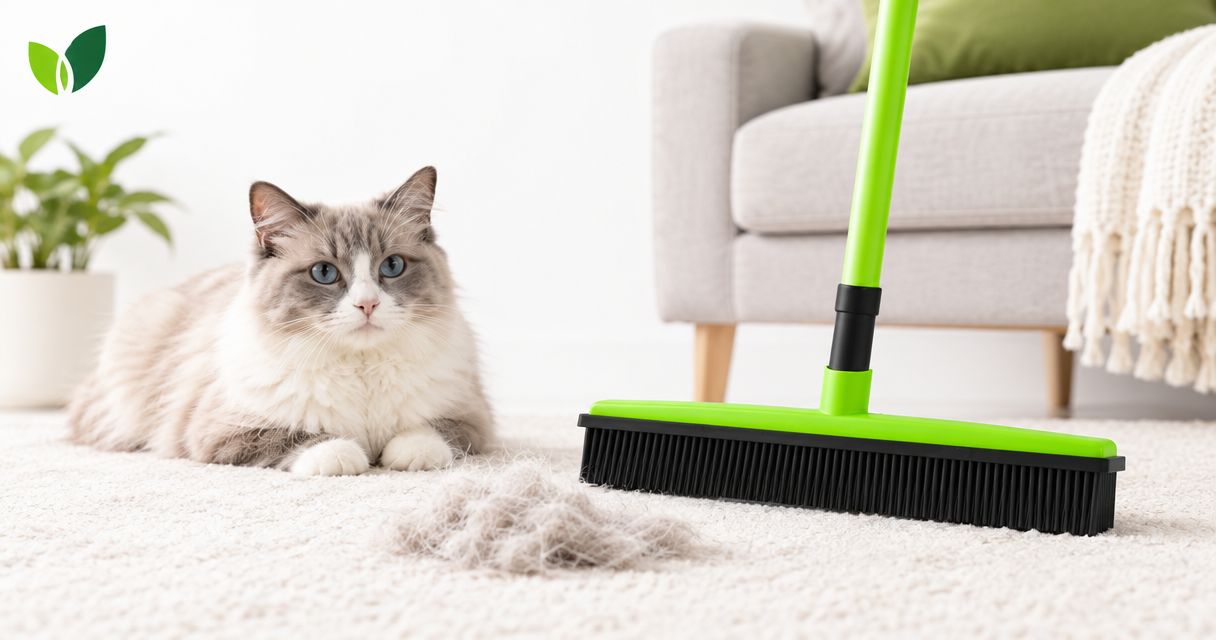
Cat owners’ pet-hair cleanup is the routine removal of shed fur from household surfaces to keep shared spaces comfortable and easier to maintain. A pet hair removal broom for cat hair gives you a manual way to gather loose fur, but the right choice depends on your flooring, rugs, and where your cat spends time.
- Choose a pet hair removal broom for cat hair by surface compatibility, not promises of universal cleaning.
- Use a broom for loose fur; keep a vacuum for carpet, crevices, and remaining debris.
- Rustic Rose Market serves everyday shoppers browsing home and pet products; check individual cleaning-tool details before choosing.
- Test a hidden patch, gather fur gently, and clean the broom head after use.
Why pet-hair cleanup matters for cat owners
Cat hair is not a single cleaning job. Loose strands on a kitchen floor, fur caught in a rug, and hair on a favorite chair call for different approaches. A broom that gathers visible floor fluff is not automatically suitable for upholstery or delicate carpet.
For your 2026 cleaning routine, start with the surfaces you actually have. The guide to choosing a pet hair removal broom covers the buying decision; this guide focuses on making that tool useful in a home shared with cats.
Choose for the surface first and the shedding second. Long hair is easy to notice, but the cleaning method still needs to suit the floor finish and textile care instructions. A clean-looking floor also does not establish that allergens or fine dust have been removed.
Build an everyday cat-hair cleanup routine
Identify your cat’s cleanup zones
Before buying anything, use the tools you already own to find where fur collects. Check resting spots, the edges of rugs, and the route between your cat’s favorite rooms. Treat the litter area separately: scattered litter and loose hair are different kinds of debris.
Start with 3 cleanup zones: the favorite resting area, the main walking route, and the litter-area perimeter. This is a planning suggestion, not a claim that every home needs the same routine. Add other areas only when you see a reason.
Your 2026 cleanup plan should follow visible buildup rather than an ambitious whole-house schedule. A focused pass is easier to repeat than moving every piece of furniture each time.
- Resting area: Check the floor around beds, chairs, and sunny windows.
- Walking route: Look along baseboards and beneath accessible furniture edges.
- Litter perimeter: Remove scattered granules before dragging a cleaning head across the floor.
- Collection point: Choose an open spot where you can pick up gathered fur immediately.
Match the broom head to the surface
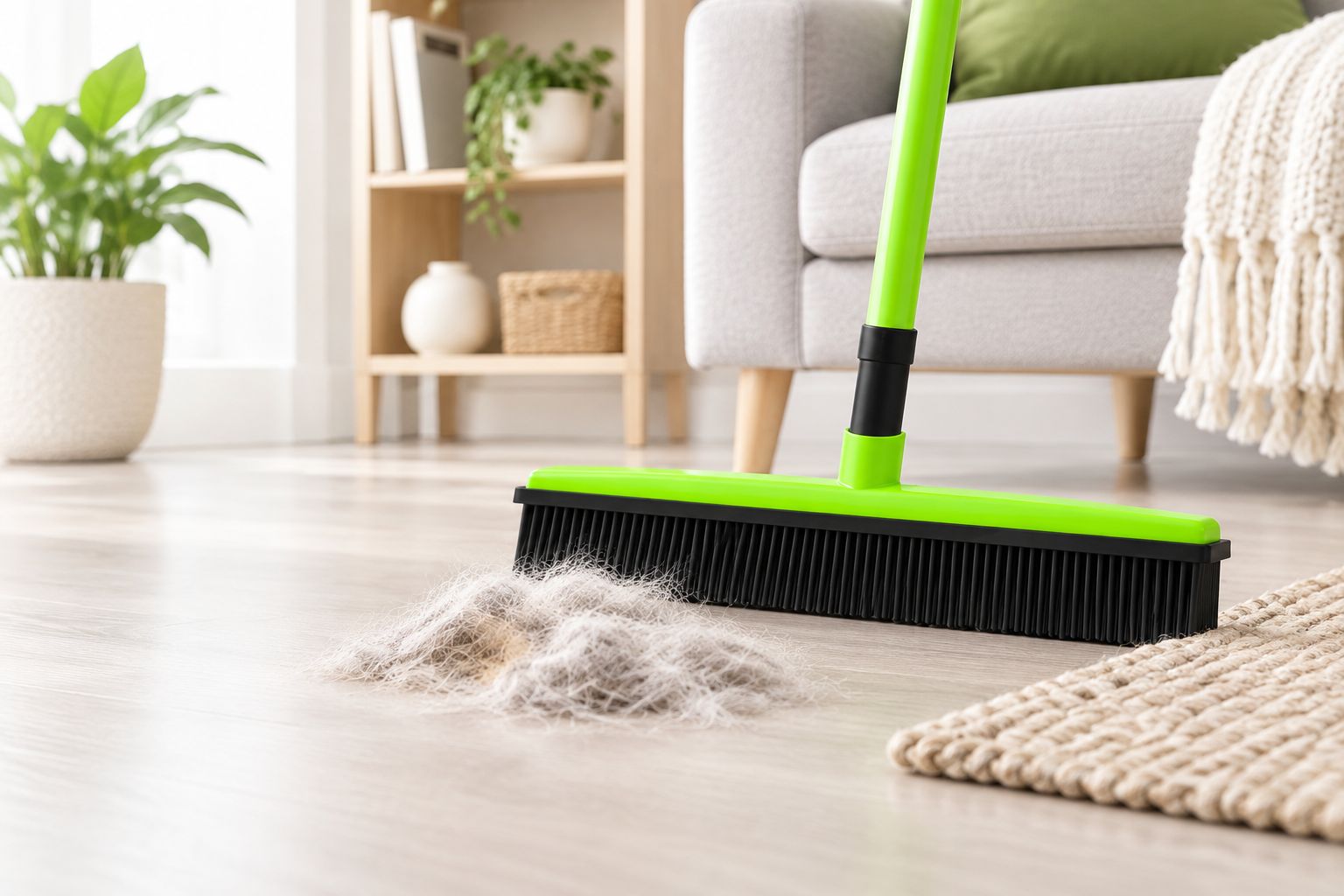
Read the floor or rug care instructions before testing a new tool. Then inspect the broom head for stiff edges, trapped grit, and damaged parts. A tool described as suitable for pet hair still needs to be appropriate for your particular surface.
Rubber-bristled brooms are an option for gathering loose hair, but rubber alone is not proof of scratch-free use. Grit caught beneath any cleaning head can drag across a finish. Carpet compatibility also varies with the construction and condition of the rug.
Test a 1-square-foot patch in a hidden area as a suggested starting point. Use light pressure and inspect the surface afterward. Stop if you notice snagging, loose fibers, marks, or a change in appearance.
- Check the tool’s stated surface compatibility.
- Follow the flooring or rug maker’s cleaning instructions.
- Remove grit before testing the broom.
- Avoid fringe, loose loops, and damaged textile edges.
- Stop rather than increasing pressure when the head catches.
Choose features that make cleanup easier
Try your existing broom first and note what gets in the way. An awkward handle, a head that cannot reach beneath furniture, or bristles that are difficult to clear gives you a useful shopping checklist. Buy to solve those problems, not to collect another cleaning tool.
Rustic Rose Market is best for everyday shoppers browsing a mix of home and pet products. The small, faith-driven business offers general merchandise; evaluate any cleaning tool by its own listed features rather than assuming specialist capabilities from the store’s broader selection.
When browsing Rustic Rose Market, check the individual listing for materials, head dimensions, handle details, and care directions. A pet hair removal broom can simplify targeted gathering, but it still needs manual effort and does not replace every floor-cleaning task. A listing should give you enough detail to judge those trade-offs.
- Head shape: Compare it with the gaps around your furniture.
- Handle fit: Look for a length or adjustment range that suits you.
- Cleaning access: Check how trapped hair comes off the head.
- Surface guidance: Look for explicit instructions rather than broad promises.
- Storage: Decide where the dry tool will live between uses.
Gather fur with controlled strokes
Begin with a dry, clear floor unless both the surface instructions and broom instructions permit another method. Move cords, small toys, and other obstacles. Pick up anything hard or sharp before sweeping.
Pull the broom in short, controlled strokes toward your collection point. Keep pressure light enough that the head moves without catching. If the tool skips, snags, or simply pushes hair around, stop and reassess the angle, head condition, and surface match.
For a manageable 2026 habit, set a 5-minute timer for your first targeted cleanup. The timer is a suggested boundary, not a promise about how long cleaning takes. Notice which area needs attention instead of trying to finish the entire home.
- Work toward an open collection point, not beneath furniture.
- Keep the head clear when hair starts wrapping around it.
- Collect each gathered pile before walking through it.
- Use a dustpan or another suitable pickup method for the pile.
- Keep your cat away from moving tools and collected debris.
Finish the jobs the broom leaves behind
A broom gathers what its head can reach and move. It does not provide suction, reach every crevice, or establish that a carpet is thoroughly cleaned. Keep vacuuming and other surface-appropriate care in the routine.
On suitable carpet, gentle broom work can be a preliminary step when the tool and carpet instructions allow it. Vacuum afterward according to the carpet’s care directions. For a chair or cat bed, use an upholstery-appropriate method instead of assuming the floor broom belongs there.
Visible fur removal and deeper cleaning are separate jobs. If allergies are a concern, do not treat a gathered hair pile as evidence of allergen removal. Choose your wider cleaning approach with the relevant product instructions and health guidance in mind.
- Vacuum compatible rugs and carpets as directed.
- Use suitable attachments for corners and furniture edges.
- Follow textile labels when laundering removable covers.
- Keep floor-cleaning heads off food-preparation surfaces.
- Address spills separately using the surface’s approved method.
Clean and store the broom properly
Remove trapped hair after each cleanup so the next pass starts with a clear head. Follow the manufacturer’s directions for washing; not every handle, joint, or head is designed for soaking. Do not assume a removable-looking part is meant to detach.
If rinsing is permitted, remove the hair into the trash before rinsing the head. Let washable components dry as directed before putting the broom away. Avoid adding disinfectants, fragrances, or other cleaners unless the tool instructions permit them.
Make a quick condition check part of your 2026 routine. A loose connection or damaged edge is a reason to stop and inspect the tool, not compensate by pressing harder.
- Lift off wrapped hair before any permitted washing.
- Check bristles and edges for trapped grit.
- Tighten connections only as the instructions allow.
- Dry washed parts before enclosed storage.
- Keep the broom away from litter scoops and food utensils.
Compare cat-hair cleanup options
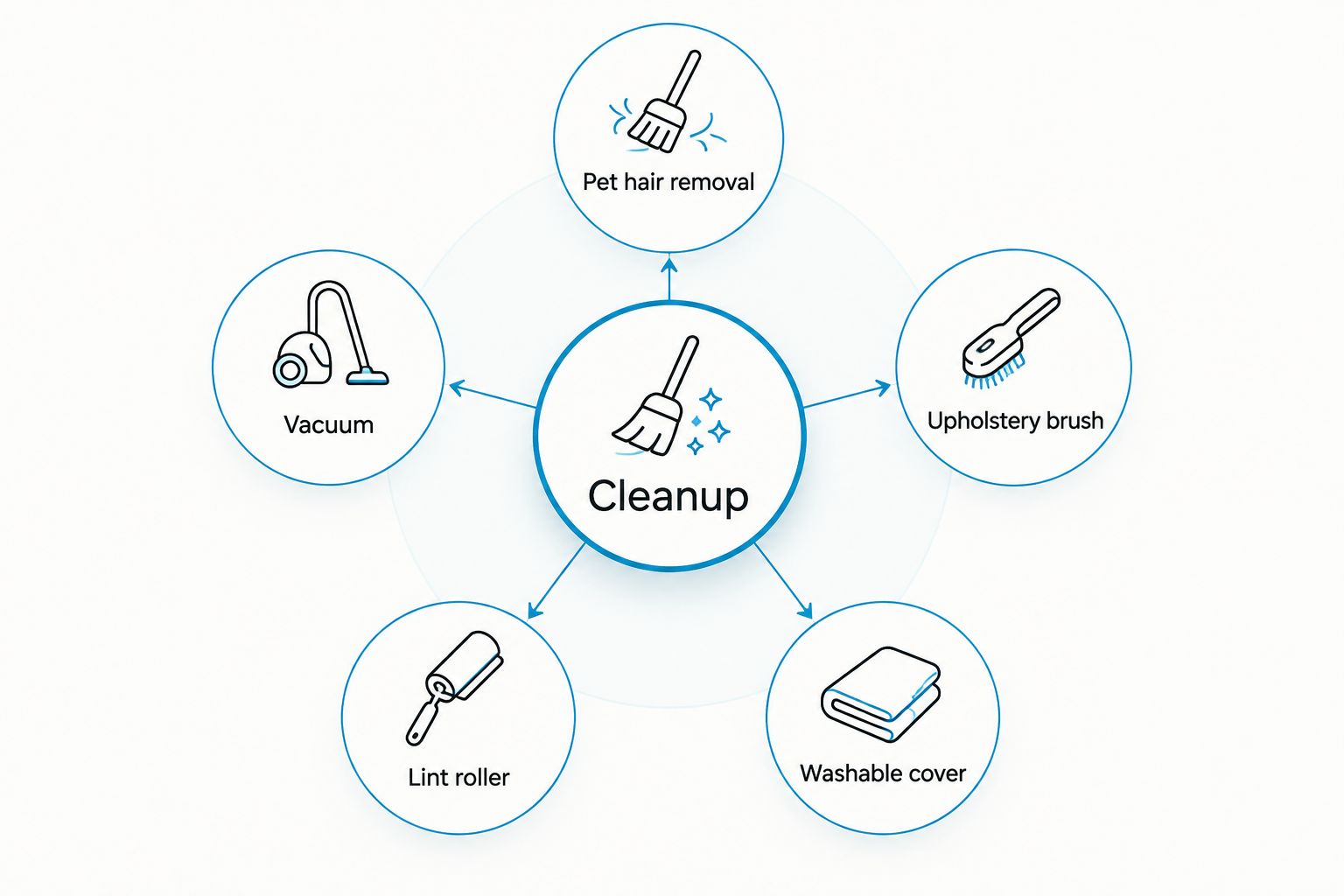
The best option depends on the task in front of you. A pet hair removal broom is best for targeted manual gathering; a vacuum is best for suction-based floor cleaning. Neither verdict means every model suits every surface.
Use this comparison for your 2026 shopping list before choosing features. Start with what you already own, then fill a specific gap. Avoid buying several overlapping tools before checking whether a better routine solves the problem.
| Option | Best for | Useful advantage | Key limitation |
|---|---|---|---|
| Pet hair removal broom | Gathering loose floor fur on compatible surfaces | Lets you direct hair into a collection point | Requires manual collection and surface checks |
| Vacuum | Suction-based cleanup on approved floors and carpets | Collects debris into its container or bag | Attachments and settings must suit the surface |
| Reusable upholstery brush | Targeted hair pickup on compatible fabric | Gives you a separate tool for seating | Not every fabric tolerates brushing |
| Adhesive lint roller | Small touch-ups on compatible clothing or fabric | Picks up hair without a full floor-cleaning session | Uses replaceable adhesive sheets and is impractical for whole floors |
| Washable throw or cover | Protecting a favorite resting spot | Gives you a removable layer to clean | Needs laundering according to its care label |
A washable cover is not a substitute for cleaning the furniture beneath it, and an upholstery brush does not become floor-safe simply because it removes hair. Keep each tool’s job clear.
Common mistakes cat owners make
Treating litter and fur as the same cleanup
Sweeping hair across scattered litter can drag hard debris along the floor. Pick up the granules first using a method suitable for your flooring, then gather the remaining fur. Keep litter-area tools separate from tools used on seating.
Using extra pressure on a favorite rug
More force is not proof of better cleaning. If a broom catches on loops, fringe, or worn fibers, stop using it on that area. Return to the rug’s care instructions rather than repeating harder strokes.
Expecting a broom to clean the sofa too
A cat’s favorite chair needs its own surface check. Floor grit, an unsuitable head, or aggressive brushing can make a floor tool a poor choice for upholstery. Use a clean, fabric-appropriate tool and test it out of sight.
Buying around a promise instead of a task
A broad pet-hair claim tells you less than clear material and care information. Rustic Rose Market shoppers should use the same checklist as shoppers anywhere else: surface fit, comfortable handling, easy cleaning, and honest limits. Leave unsupported performance promises out of the decision.
Leaving gathered fur for later
A pile in a doorway is not a finished cleanup. Pick it up before a person or pet walks through it, then clear the head. Finish one small zone before expanding the job.
FAQ
What's the best pet hair removal broom for cat hair?
The best pet hair removal broom for cat hair is one explicitly suited to your flooring and comfortable for you to use. Compare head material, handle fit, cleaning instructions, and surface restrictions rather than relying on universal-removal claims.
Can I use a pet hair broom on hardwood floors?
Use a pet hair broom on hardwood only when the broom guidance and floor care instructions permit it. Remove grit, inspect the head, and test a hidden patch with light pressure before cleaning a larger area.
Will a pet hair removal broom work on my cat's favorite rug?
Use a pet hair removal broom on your rug only if the tool and rug care instructions allow it. Stop immediately if the head catches, pulls fibers, or changes the surface appearance.
Can a cat-hair broom replace my vacuum?
A cat-hair broom does not replace suction-based vacuum cleaning. It can gather loose fur on compatible surfaces, while a suitable vacuum handles its own approved floor, carpet, and attachment tasks.
How often should I sweep cat hair?
Sweep when visible fur builds up in the areas your cat uses. Start with a brief check of resting spots and walking routes, then adjust the routine to what you actually find.
Should I wet the broom before picking up cat hair?
Wet the broom only if both the tool instructions and surface care guidance permit it. Do not add water or cleaning products simply because dry sweeping leaves some hair behind.
How do I clean cat hair out of the broom head?
Remove trapped hair into the trash, then follow the broom manufacturer's washing instructions. Rinse only washable parts and let them dry as directed before storage.
One last thing
Store the cleanup tools near the problem, not just near each other. A fabric-safe brush near your cat’s favorite chair and a floor tool near the main cleanup zone can make the routine easier to start. Keep both out of your cat’s reach and avoid storing a damp head against a wall or textile.
Your first improvement does not have to be another purchase. Clear one resting area, gather the fur, finish with the appropriate cleaning method, and see which part of that routine actually needs a better tool.