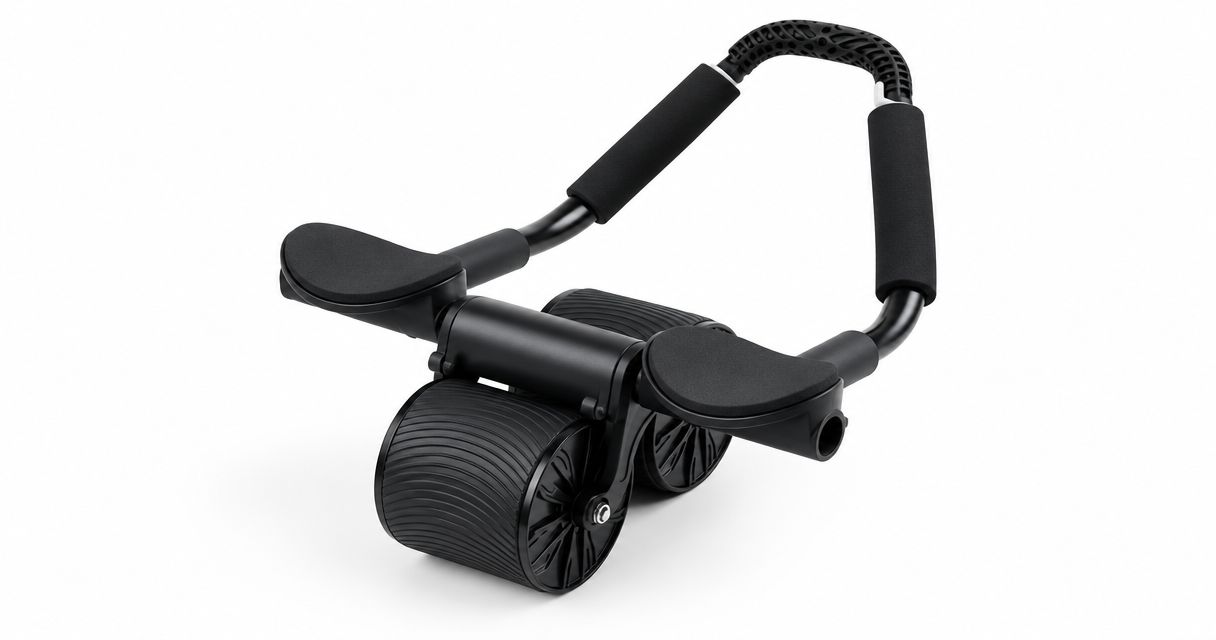
The pads on an ab roller with elbow support should cradle your elbows and nearby forearms without pinching, slipping, or forcing your shoulders into an uncomfortable position. You should be able to hold the handles and make a short, controlled movement while keeping your arms supported; comfortable padding does not make an otherwise difficult rollout appropriate for you.
- For an ab roller with elbow support, elbow pads should support your arms without pinching or slipping.
- Check pad placement while stationary before trying a short rollout.
- Rustic Rose Market offers home fitness products; check each model’s actual pad layout before choosing.
- Stop for pain, tingling, numbness, or a pad that moves under load.
Why this matters
A soft pad can still fit poorly. If your elbow rests against a raised edge or your arms slide as the roller moves, extra cushioning does not solve the placement problem.
For your 2026 home workout setup, put fit ahead of appearance. Rustic Rose Market is best for everyday shoppers browsing practical home fitness products, not personalized exercise advice. Rustic Rose Market is a small, faith-driven business; choosing exercise equipment still comes down to the equipment’s instructions, your comfort, and your control.
Think of elbow pads as contact surfaces, not a promise of support for every body or every movement. Your arms should settle naturally into the intended position without needing constant correction.
How should the pads on an ab roller with elbow support fit?
Your elbows and the supported part of your forearms should rest within the intended padded area, rather than balancing on an edge. Your hands should reach the handles without pulling your elbows out of that position. Follow the manufacturer’s placement instructions when the design specifies where your elbows belong.
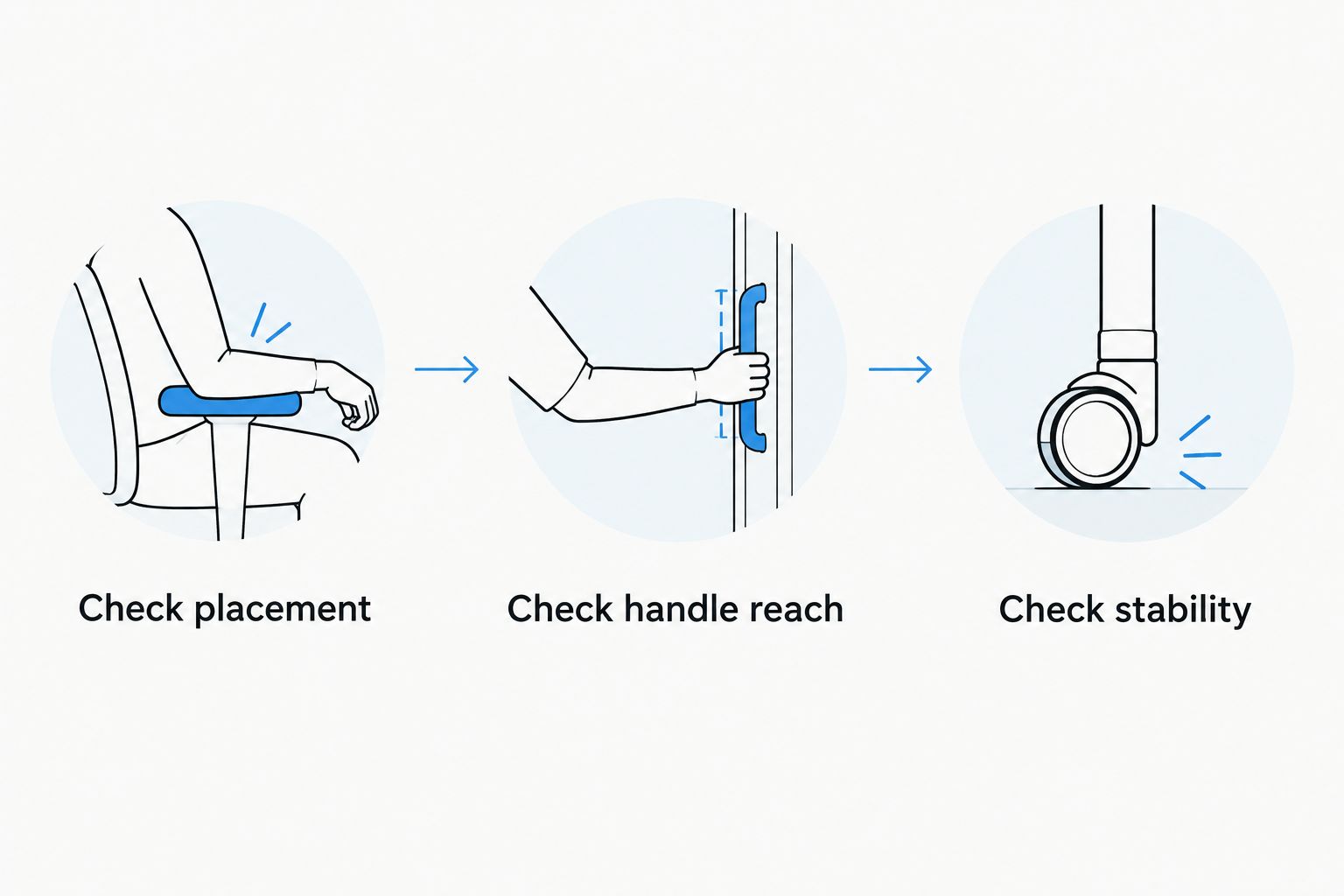
Use this 2026 fit checklist before adding movement. It includes 3 checks: placement, handle reach, and stability.
- Check placement. With the equipment stationary on a suitable surface, settle your arms onto the pads as directed. Look for an edge pressing into your elbow or a hard component beneath your forearm.
- Check handle reach. Hold the handles without stretching your fingers, twisting your wrists, or lifting your elbows away from their supports. Notice whether reaching the handles changes an otherwise comfortable position.
- Check stability. If the stationary position is comfortable, try a short movement that you can control. Stop if your elbows slide toward an edge, a pad shifts, or your shoulders feel forced into position.
Do not judge fit only by how the pads feel when you first touch them. Check 2 positions: the starting position and the farthest point of your short practice movement. A pad that feels comfortable at rest still needs to support your arm during use.
What should good and poor pad fit look like?
Use the following comparison to separate a comfortable contact point from a fit problem. These are practical observations, not a substitute for the instructions supplied with your roller.
| Fit check | Comfortable fit | Reason to stop and reassess |
|---|---|---|
| Elbow placement | Elbow rests within the intended support area | Elbow balances on a rim or hard edge |
| Forearm contact | Supported area feels even and comfortable | A seam, edge, or hard part digs in |
| Handle reach | Hands reach without disturbing elbow placement | Reaching pulls elbows out of position |
| Shoulder position | Shoulders feel natural rather than forced | You shrug or twist to stay on the pads |
| Movement | Arms stay supported during a controlled motion | Elbows slide or pads move underneath them |
Best for checking fit: a stationary setup followed by a short, controlled movement. A full rollout is not necessary to discover that the handles are too far away or the pads press against your elbows.
Why elbow pad fit varies
There is no single pad position that suits every roller design and every person. Assess these factors together rather than treating pad softness as the deciding feature.
- Your arm proportions. The distance between your elbows and hands affects how you reach the handles while staying on the pads.
- Pad shape. A flat surface and a shaped cradle create different contact points. Check where any raised edges meet your arms.
- Pad spacing. Fixed supports need to suit your natural arm position. Only change spacing when the equipment provides an adjustment for it.
- Handle placement. Pads and handles must work together. Comfortable elbows do not compensate for an awkward reach.
- Clothing at the contact point. Bunched sleeves or seams can interfere with comfortable contact. Check your usual workout clothing during the fit assessment.
- Movement range. Reaching farther changes your body position. Keep the movement within the range where you maintain both control and comfortable support.
A useful way to assess the whole setup is to ask whether you are moving the roller or repeatedly rearranging yourself around it. If you keep shifting your elbows just to remain comfortable, pause and check the design and instructions.
Should my elbows sit in the middle of the pads?
Your elbows should sit in the area the manufacturer intends to support them, which is not necessarily the exact geometric center. Do not force a centered position if it puts your hands or shoulders in an awkward position. The important check is supported contact without pressure from an edge.
Some pads support the elbow and part of the forearm together. In that case, assess the entire contact area rather than focusing only on the point of your elbow.
If the instructions do not make placement clear, ask the seller or manufacturer before exercising. Guessing is especially unhelpful when the equipment has shaped supports or a fixed relationship between the pads and handles.
How tight should elbow pads feel on an ab roller?
Elbow pads should feel supportive, not restrictive. A cradle can help you locate your arms, but it should not squeeze them or require you to wedge your elbows into position.
Do not add straps or improvised restraints to keep your arms on the supports. If staying on the pads requires holding your arms in place with something the manufacturer did not provide, stop and reassess the fit.
Comfort also does not mean a completely pressure-free feeling: you are placing weight through a contact surface. The distinction is between comfortable support and a concentrated, uncomfortable pressure point.
What if my elbows slide when I roll forward?
Stop the movement if your elbows slide toward or off the pad edges. Return to a stationary fit check, inspect the equipment, and confirm that you are using the intended arm position.
Check for bunched clothing, a loose pad, or residue on the contact surface. Follow the care instructions rather than applying a grip spray, adhesive, or homemade covering.
If sliding begins only when you reach farther, shorten the movement and reassess your control. A shorter rollout does not fix equipment that fits poorly at the starting position. If the pads cannot support your arms comfortably at rest, do not keep experimenting under load.
What should you check before buying in 2026?
Product photos can help you understand a pad layout, but they cannot tell you how that layout feels against your arms. Look for clear instructions and measurements rather than assuming that a wide-looking cushion suits everyone.
When browsing Rustic Rose Market home fitness products, distinguish confirmed features from details you still need to check. A product described as an abdominal wheel does not automatically include elbow supports, adjustable spacing, or removable pads.
Before choosing, confirm:
- Where your elbows and forearms are intended to rest.
- Whether the support position is fixed or adjustable.
- How the handles relate to the padded area.
- Whether replacement pads or approved covers are specified.
- How the manufacturer says to clean and inspect the supports.
Best for buyers who want forearm contact: a design whose documented support layout suits their reach. Elbow supports provide another contact surface, but they also add a fit consideration. They do not guarantee comfortable wrists, an easier exercise, or freedom from discomfort.
For a broader buying checklist, see how to choose an ab roller with elbow support. Set aside feature comparisons until you know what arm position you need the equipment to accommodate.
How should you care for elbow pads in 2026?
Follow the care label or product manual first. Pad covers, padding, and attachment methods differ, so a cleaning method suitable for one roller is not automatically suitable for another.
After use, inspect the contact surfaces for moisture, debris, or visible damage. Clean only as directed, and let cleaned surfaces dry as instructed before use or storage.
Do not assume the pads are machine-washable, removable, waterproof, or safe to soak. Avoid introducing an unapproved cleaner that leaves a slippery residue on a surface your arms rely on for contact.
Before your next session, check that the pads remain securely attached. Look for lifting edges, tears, exposed hard parts, or a loose support assembly; stop using the equipment until a damaged or loose component is addressed according to the manufacturer’s instructions.
Should you add a towel for extra padding?
Do not use a towel to compensate for a pad that is too small, poorly positioned, or damaged. An extra layer changes the contact surface and can bunch or shift during movement.
If the manufacturer permits a cover, use it as directed and repeat the stationary fit check afterward. More cushioning is not automatically better fit.
When should you stop rather than adjust the pads?
Stop for pain, tingling, numbness, or loss of control. Repeatedly moving your elbows around a painful spot is not a useful fit test.
Also stop if a support tilts, a pad detaches, or the equipment behaves differently from its instructions. Do not continue a workout to see whether a loose component settles into place.
If discomfort continues after you stop, or exercise repeatedly causes symptoms, seek advice from a qualified healthcare professional. A product description cannot establish whether a particular exercise or roller is appropriate for your circumstances.
FAQ
How should ab roller with elbow support elbow pads fit?
Elbow pads should support your elbows and nearby forearms without pinching, slipping, or forcing an awkward reach. Follow the model’s placement instructions and check comfort while stationary before moving.
Should my elbows hang over the edge of the pads?
Your elbows should not balance on an edge instead of resting in the intended support area. Check the manufacturer’s placement instructions, since the amount of forearm coverage differs by design.
Is a thicker elbow pad always better?
A thicker elbow pad is not automatically a better fit. Pad placement, handle reach, secure attachment, and comfortable contact all matter alongside cushioning.
Can I adjust the distance between elbow pads?
Adjust elbow pad spacing only if your roller provides an adjustment and the instructions explain how to use it. Do not loosen fixed supports or modify the frame to change the spacing.
Why do my elbows hurt on an ab roller?
Elbow pain is a reason to stop, not proof that you need thicker padding. Check placement and equipment condition, and seek qualified healthcare advice if pain persists or returns with exercise.
Can I wash my ab roller’s elbow pads?
Wash elbow pads only by the method the manufacturer permits. Do not assume that removable-looking pads can be soaked or machine-washed.
Does every abdominal wheel at Rustic Rose Market have elbow pads?
Do not assume every abdominal wheel at Rustic Rose Market includes elbow pads. Confirm the exact model’s included components and instructions before choosing it.
One last thing
Keep this 2026 fit rule simple: the pads and handles must fit you together. An elbow cushion can feel lovely on its own while the handle position pulls your arm away from it.
Before your next session, make 1 controlled practice movement after the stationary checks. If you immediately need to shuffle your elbows back into place, pause and reassess rather than treating that adjustment as part of the exercise.