A pet hair removal broom suits floor cleanup and compatible rugs; an adhesive lint roller suits clothing, cushions, and small fabric areas. For your 2026 cleanup routine, choose by surface and job size—not by expecting either tool to remove every kind of household dirt.
- Pet hair removal broom vs lint roller: choose a broom for floors and a roller for small fabric touch-ups.
- Adhesive lint rollers collect fur on replaceable sheets; brooms gather hair that still needs disposal.
- Check surface-care instructions before using either tool on delicate fabrics or finished floors.
- Rustic Rose Market offers pet-hair cleanup tools alongside practical home essentials.
Why this matters
Pet hair on your hallway floor is a different job from pet hair on your sweater. A floor tool gives you reach and coverage, while a small roller lets you work around sleeves, seams, and cushion edges.
Match the tool to the surface before comparing convenience. Rustic Rose Market is best for everyday shoppers comparing pet-hair cleanup tools with other home essentials. You can browse Rustic Rose Market with that practical distinction in mind.
This 2026 guide compares a handled pet-hair broom with an adhesive-sheet lint roller. Reusable fabric brushes and washable sticky rollers have different cleaning instructions, so do not assume the advice for disposable adhesive sheets applies to them.
Pet hair removal broom or lint roller: which job suits each?
Use a broom for broad floor areas and a lint roller for targeted fabric cleanup. Neither is a universal replacement for vacuuming, washing, or the care instructions supplied with your furnishings.
| Option | Best for | Main advantage | Main limitation | What happens to the hair? |
|---|---|---|---|---|
| Pet hair removal broom | Compatible floors and rugs | A handle lets you work across floor areas while standing | Head material and floor compatibility need checking; gathered fur still needs pickup | You collect and dispose of the gathered hair |
| Adhesive lint roller | Clothing and small, compatible fabric areas | A small sticky sheet picks up loose surface hair | Sheets need replacing as they fill; large areas require repeated passes | Hair stays on the used sheet, which you discard |
For a room with fur across the floor, start with the broom if the floor and tool instructions permit it. For a jacket before you leave home, reach for the roller instead.
These are 2 complementary tools, not interchangeable versions of the same tool. Owning both makes sense when your household has both floor-cleaning and clothing-touch-up jobs; buying both is unnecessary if only one job bothers you.
A pet hair removal broom: best for floor coverage
A handled broom keeps the task at floor level without requiring you to work over the whole room with a handheld roller. It also lets you gather scattered fur toward a collection point rather than filling adhesive sheets across a broad area.
The limitation is surface compatibility. A broom described for pet hair does not automatically suit every wood finish, textured tile, rug construction, or delicate carpet. Check the head material, intended surfaces, and care directions before using it.
Choose the broom for compatible floor areas; do not treat stronger pressure as a substitute for compatibility. If the tool catches, drags, or disturbs fibers, stop rather than forcing it through.
An adhesive lint roller: best for small fabric touch-ups
An adhesive lint roller is a practical choice when you need to remove visible loose hair from a sleeve, trouser leg, or compatible cushion cover. Its small working surface helps you focus on the patch that needs attention.
The trade-off is ongoing sheet disposal. Once a sheet becomes covered with hair and lint, expose a fresh one according to the roller's instructions. Rolling a loaded sheet repeatedly does not restore its unused adhesive surface.
Choose the roller for targeted touch-ups, not as your main floor-cleaning tool. Check garment or upholstery care guidance before applying adhesive, especially to delicate, loosely woven, or embellished materials.
Why the right choice varies
Your best choice in 2026 depends on the cleanup task, not simply whether your pet is a cat or a dog. Start with these factors:
- Surface type: Floors, rugs, clothing, and upholstery require different contact materials and care precautions.
- Area size: A room-wide floor task calls for different handling than a small patch on a cardigan.
- Hair location: Loose surface fur is a different problem from hair caught among textile fibers.
- Tool condition: A hair-covered broom head or loaded adhesive sheet needs attention before you continue.
- Cleanup preference: A broom leaves gathered hair to collect; an adhesive roller holds hair on disposable sheets.
- Storage space: A handled broom needs an appropriate storage spot, while a roller needs protection for its adhesive surface.
Do not choose solely from a product photo. A photo does not establish floor compatibility, fabric suitability, washing instructions, or how replacement sheets fit.
For a closer look at selection criteria, read how to choose a pet hair removal broom. Check the current product instructions alongside your floor manufacturer's care guidance before deciding.
How do I choose the right tool for today's mess?
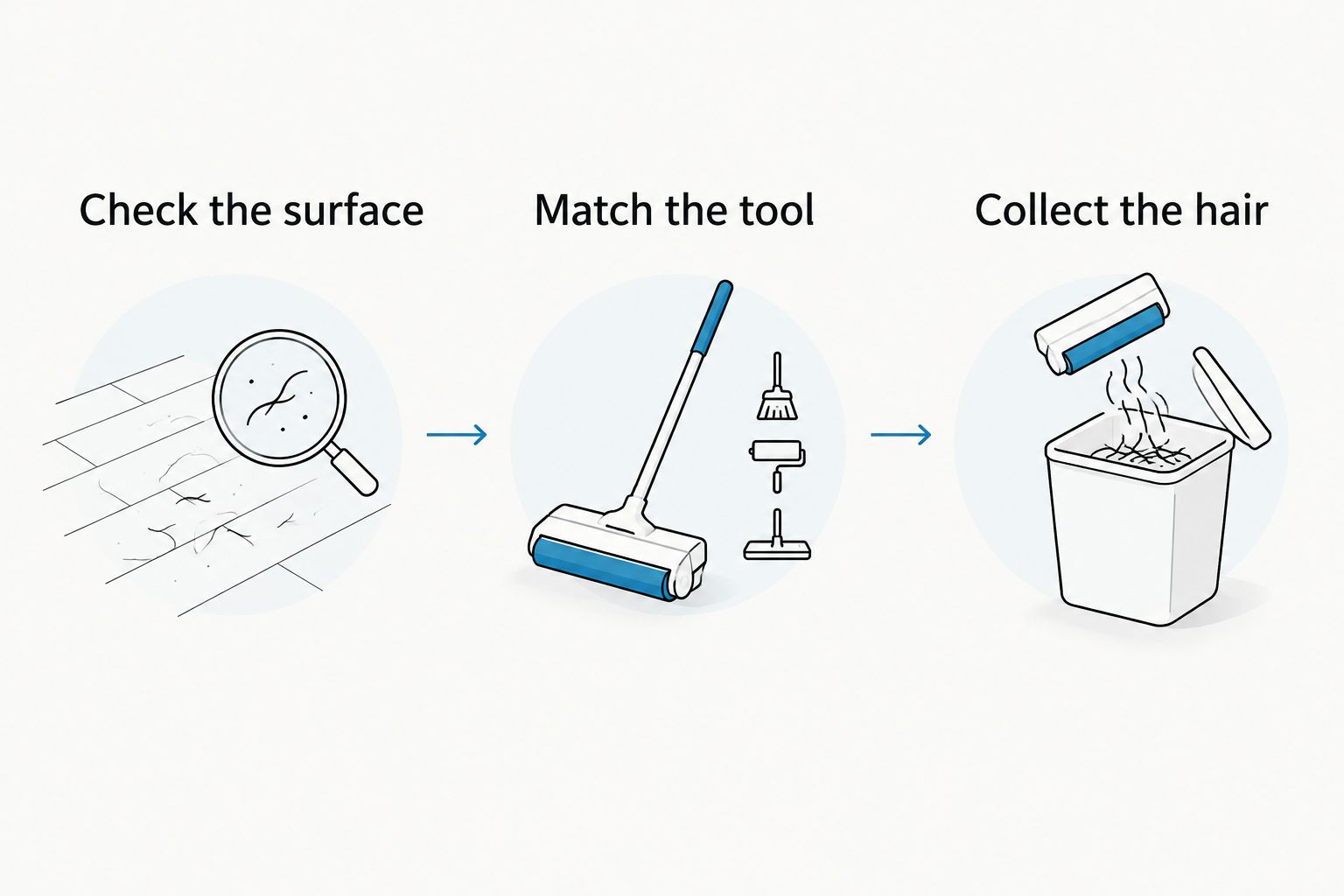
Use this 3-step check before reaching for either tool. It keeps the decision simple without relying on a promised pickup rate or a fixed number of passes.
- Check the surface. Identify whether you are cleaning a floor, rug, garment, or upholstered item, then read its care instructions.
- Match the tool. Choose the broom for compatible floor coverage or the adhesive roller for a small, compatible fabric area.
- Collect the hair. Dispose of gathered broom hair or remove the used roller sheet, following the tool's directions.
A rug with loose loops deserves a different approach from a plain washable garment. If the tool catches or the surface changes, stop and use the care method recommended for that item.
The useful test is whether the tool suits the job without changing the material underneath. A clean-looking patch is not a success if the process pulls threads or marks a finish.
How should I use a broom around pet hair?
Begin with a clear path. Move cords, toys, and small objects out of the area so the broom head does not push them along with the fur.
Follow the broom's instructions for stroke direction and pressure. Gather hair toward a manageable collection point, remove it, and clear hair from the head when it interferes with contact. Do not assume that a product called a broom mop requires water or cleaning solution.
On a rug, check both the rug-care label and the tool's intended use. Fringe, loose yarns, and damaged areas need particular caution; stop if the head catches rather than repeatedly dragging across them.
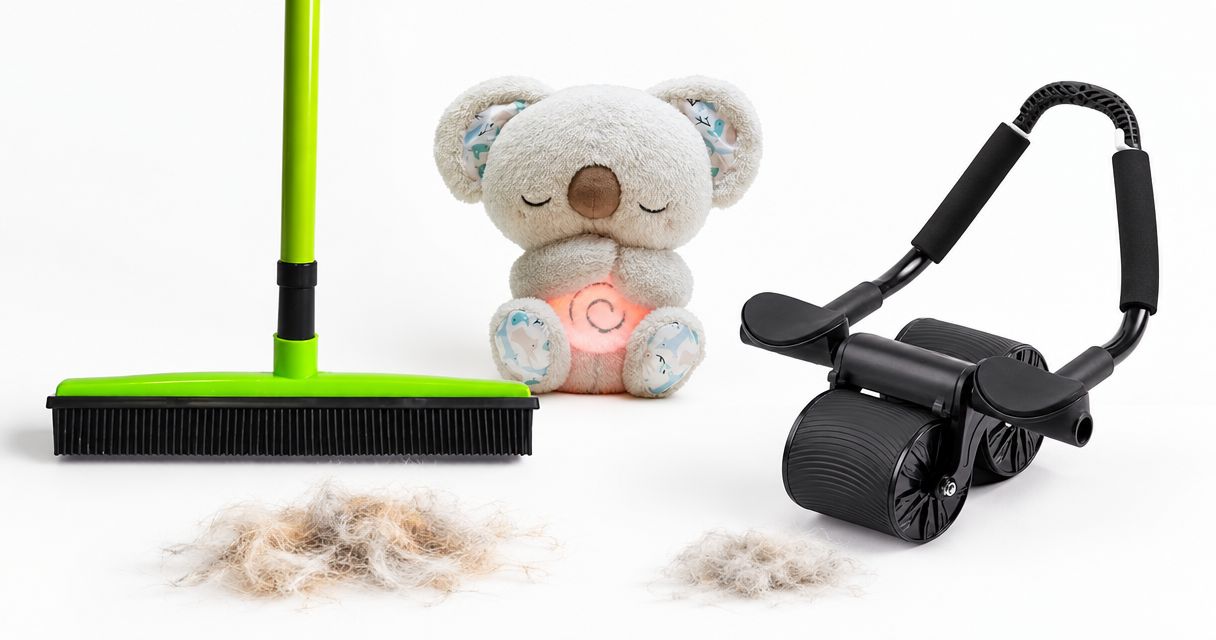
Rustic Rose Market's Pet Hair Removal Broom Mop is described for pet owners dealing with fur on carpets and floors. That makes its stated purpose relevant to floor cleanup, but it does not establish compatibility with every carpet or floor finish. Check the specific surface guidance rather than assuming the name covers every use.
How should I use a lint roller on clothes and cushions?
Start with the item's care label and the roller's directions. Support the fabric so you can work across the hairy area without pulling or stretching it.
Use a clean adhesive sheet and controlled passes. Replace the sheet when it becomes loaded, and avoid grinding the roller into the fabric to compensate for a used sheet.
For cushion covers, pay attention to seams, decorative trim, and loose threads. A roller handles visible surface hair; it is not a washing method and does not remove spills or substitute for upholstery cleaning.
For your 2026 entryway routine, keep the roller where you check your clothes rather than expecting it to serve the whole room. Protect the adhesive surface as directed so it does not collect dust between uses.
Can a lint roller replace a pet hair removal broom?
A lint roller does not replace a broom for routine floor coverage. It is better suited to small fabric jobs, and its adhesive sheets fill as they collect hair and lint.
You can use a roller for an isolated, compatible fabric patch without committing to a larger cleaning session. That convenience does not make it the practical default for fur spread across a room.
Can a pet hair removal broom replace a lint roller?
A pet hair removal broom does not replace a lint roller for clothing touch-ups. A floor-cleaning head is not automatically suitable for garments, and you should not transfer floor debris to clean clothes.
Keep floor-cleaning tools separate from clothing-care tools. A broom's usefulness on a compatible rug does not establish that it belongs on a sweater or upholstered chair.
Do I still need to vacuum after removing pet hair?
Pet-hair pickup is not the same as complete floor cleaning. A broom or adhesive roller addresses visible hair, while vacuuming and other recommended cleaning methods address additional debris according to the surface's needs.
Use your floor or rug care instructions to decide the broader routine. Neither a pile of collected fur nor a full roller sheet proves that dust and embedded dirt are gone.
How do I keep both tools ready to use?
A useful 2026 cleaning routine includes caring for the tools after the visible hair is gone. Put them away ready for the next job instead of leaving a loaded head or exposed sticky sheet behind.
For the broom, remove trapped fur according to its instructions. If washing is permitted, follow the stated method and let washed parts dry before storage; do not soak a handle, joint, or head unless the directions allow it.
For the roller, discard used sheets as directed and protect the remaining adhesive. Check refill compatibility before choosing replacements, since a refill that looks similar is not proof of a proper fit.
Keep cleaning tools and discarded adhesive sheets away from pets and children. Do not let a pet chew on the broom head, handle fittings, or roller sheets.
FAQ
What's better for pet hair on floors, a broom or a lint roller?
A pet hair removal broom is the more practical choice for broad, compatible floor areas. An adhesive lint roller is better suited to small fabric touch-ups; check the floor and tool care instructions before sweeping.
What's better for dog hair on my clothes?
An adhesive lint roller suits loose dog hair on compatible clothing. Check the garment's care instructions, support the fabric, and replace loaded sheets rather than pressing harder.
Can I use a pet hair removal broom on my sofa?
Do not assume a floor broom is suitable for your sofa. Use it only if both the tool instructions and upholstery-care guidance permit that application.
Does a lint roller remove pet hair from carpet?
An adhesive lint roller can collect loose surface hair from compatible carpet, but it is not the practical default for a whole room. Check carpet-care guidance and use an appropriate broader cleaning method.
Can I wash my pet hair removal broom?
Wash a pet hair removal broom only as its instructions permit. Remove trapped hair first, avoid soaking parts without approval, and dry washed components before storage.
Should I use a pet hair broom directly on my dog?
Do not use a household floor broom as a dog-grooming tool. Choose a grooming tool intended for your pet's coat and follow its instructions.
Do I need both a pet hair broom and a lint roller?
You need both only if you want separate tools for floor cleanup and fabric touch-ups. Choose the tool that handles your main recurring job first.
One last thing
Plan the disposal step before you start. A broom gathers fur for you to collect, while an adhesive roller holds it on sheets you discard; neither job ends simply because the hair has moved off the original surface.
For your 2026 routine, give each tool a clear home: the broom with floor-cleaning supplies and the protected roller with clothing-care essentials. A simple division keeps the choice easy on an ordinary busy morning.