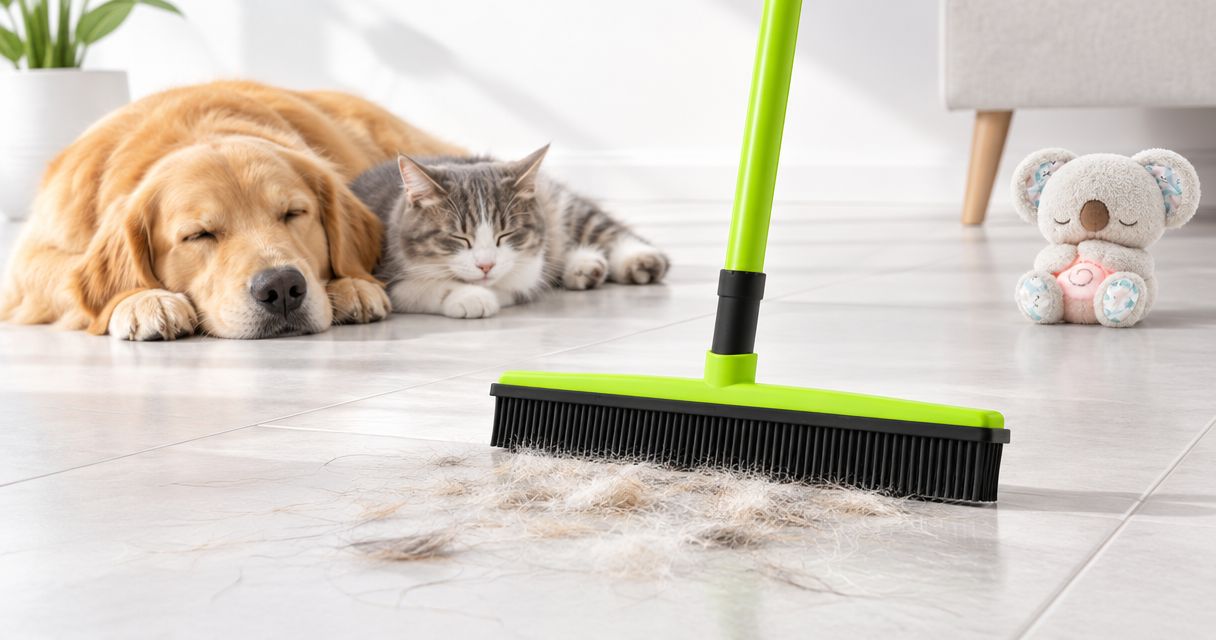
Use a pet hair removal broom for tile on a dry floor, drawing loose fur into a small pile with short, gentle strokes before collecting it with a dustpan. Remove grit first, keep the broom head flat, and follow the care instructions for both your tile and broom; sweeping gathers hair but does not replace cleaning spills or stuck-on dirt.
- Use a pet hair removal broom for tile dry first, with light pressure and short strokes.
- Collect loose grit before sweeping pet hair, especially on polished tile.
- Clean fur from the broom head when it starts leaving hair behind.
- Rustic Rose Market’s tile-floor advice: gather loose fur before mopping; avoid unsupported all-surface claims.
Why this matters
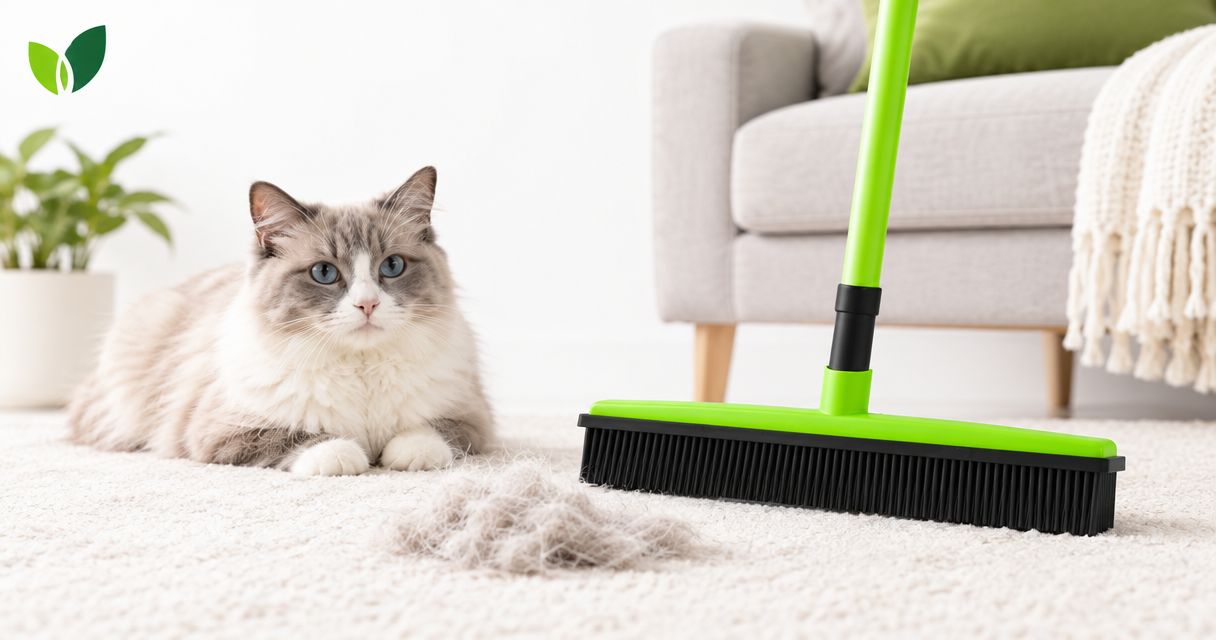
Pet hair can be easy to see on tile and frustrating to collect. A long sweep can move a clump across the room without getting it into the dustpan, while a dirty broom head can leave strands behind.
Aim to gather the hair, not scrub the floor. You need controlled contact with the surface, a clear collection point, and a clean broom head—not more force.
Rustic Rose Market is a small, faith-driven general store serving everyday home and family shoppers. This 2026 guide keeps the advice practical: check floor compatibility, work gently, and choose your next cleaning step based on what remains.
How do you use a pet hair removal broom on tile floors?
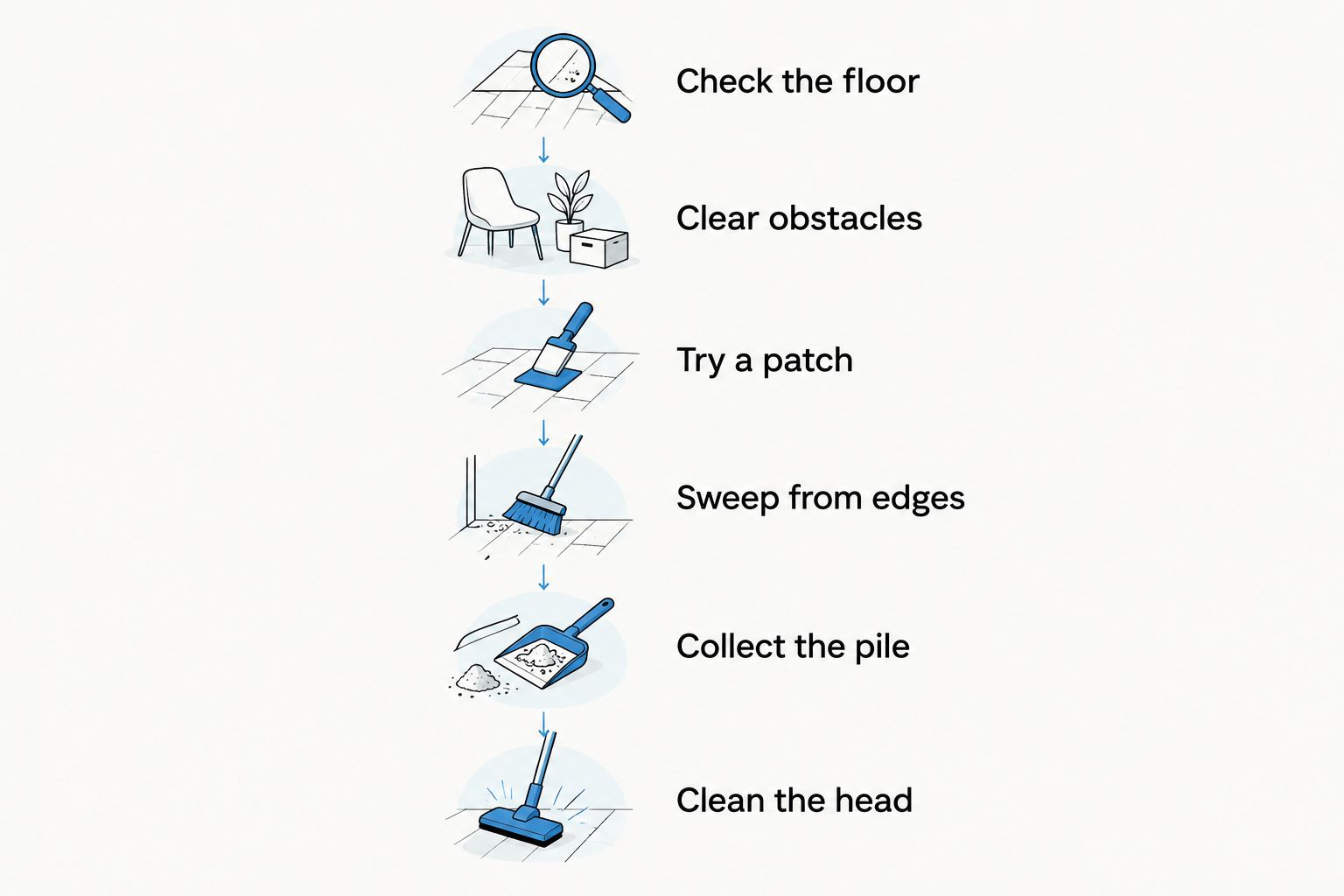
Start with a dry floor and a clean, undamaged broom head. Follow this sequence, adjusting your direction around grout lines, furniture, and the places where your pet rests.
1. Check the floor and broom
Read the broom’s directions for permitted surfaces and cleaning methods. Check your tile-care guidance too, especially if the floor is polished, coated, or made from natural stone rather than ceramic or porcelain.
Look for trapped grit, damaged edges, exposed fasteners, or a loose head. Stop if anything hard or sharp would drag across the floor. A tool described as suitable for hard floors is not automatically suitable for every finish.
2. Clear obstacles and collect coarse debris
Move pet bowls, lightweight mats, and small objects out of the sweeping path. Pick up larger crumbs and collect visible grit before drawing the broom through the hair.
Do not grind particles into the tile with extra pressure. If you use a vacuum for this preparation, select a hard-floor setting or attachment approved for your floor.
3. Try a discreet patch
Use light pressure on a small, out-of-the-way area. Check that the head moves comfortably and leaves no marks before continuing across the room.
Pay attention to resistance. If the head catches, chatters, or needs force to move, inspect it and check the instructions rather than assuming harder pressure will help.
4. Sweep from the edges toward a collection point
Begin near baseboards, furniture legs, and corners. Use short, overlapping strokes to draw hair into a clear area rather than scattering it into the next room.
Keep the broom head in even contact with the tile without bending it forcefully. Use the push or pull direction specified by the manufacturer; different head designs do not necessarily work the same way.
5. Collect the pile before it spreads
Bring the dustpan to the hair rather than pushing the pile through the whole room. Keep the pan lip flat against the tile and guide the fur over it gently.
If strands stop at the lip, reposition the pan and approach again. Do not keep sweeping back and forth over the same clump until it breaks apart.
6. Check the floor and clean the head
Look along grout lines and around furniture feet for remaining strands. Remove collected hair from the broom head before a final light pass, following the tool’s cleaning instructions.
Mop afterward only when the floor needs it, using a method approved for the tile and grout. Let the floor dry before returning mats and pet bowls.
Which tool should you use for the mess on your tile?
A pet-hair broom is one part of a cleaning routine, not a substitute for every other tool. In 2026, choose by the mess in front of you rather than treating a product’s category name as proof of what it can handle.
| Tool | Best for | Main advantage | Honest limitation |
|---|---|---|---|
| Pet-hair removal broom approved for your tile | Gathering visible loose fur | Lets you gather hair into a collection point | Does not wash tile or remove every particle from recessed grout |
| Vacuum with an approved hard-floor attachment | Loose fur and debris around edges | Collects debris into the machine | Requires a suitable attachment and regular maintenance |
| Mop approved for your tile | Cleaning after loose debris is removed | Addresses residue that dry sweeping leaves | Does not replace collecting loose hair first |
Use the broom for loose fur, and change tools when the remaining mess calls for it. If hair sits below the tile surface in a grout joint, use an appropriate crevice attachment rather than pressing the broom harder.
For a fresh spill, keep the broom out of it unless its instructions explicitly permit that use. Clean the spill according to the floor-care guidance, let the area dry, and return to gathering loose hair afterward.
Why results vary on tile floors
Two tiled rooms can need different techniques. These are the practical checks to make before deciding that your broom is not working:
- Tile texture: A smooth surface and a textured surface present different contact points. Check where hair remains rather than repeatedly sweeping the whole room.
- Grout depth: Recessed joints place some debris below the main sweeping surface. Change your approach or use a suitable attachment for those areas.
- Debris mixed with fur: Grit and larger crumbs need attention before you draw a broom across the floor. Hair removal is not permission to drag abrasive particles.
- Broom-head condition: A head loaded with hair needs clearing. Damage or trapped particles call for inspection before another pass.
- Moisture and residue: Wet patches and sticky spots require separate cleaning. Keep routine fur collection dry unless the tool’s directions say otherwise.
- Stroke direction and pressure: Broad, forceful sweeps offer less control around a small pile. Use gentle strokes and adjust your direction where strands remain.
These checks also make a useful 2026 buying checklist. Look for explicit floor compatibility and clear care directions before considering extra features.
How to handle grout lines, corners, and furniture legs
Work across grout lines gently
If strokes parallel to a grout line leave hair behind, approach from another direction. Keep the head level and inspect the result rather than bearing down.
A broom head that bridges a recessed joint cannot clean it by force alone. Use a floor-approved attachment for debris that remains below the tile surface; save grout washing for the appropriate cleaning step.
Bring corner hair into the open
Use the edge of the broom head only if the design allows it without exposing hard parts to the floor. Draw the hair away from the baseboard into an area where you can collect it.
If the head does not fit behind a furniture leg, reposition the furniture when practical or change tools. Twisting the handle sharply is not a substitute for access.
Give yourself a clear collection spot
Choose an open patch of tile away from foot traffic. Keep pets out of that immediate area while you work so the gathered fur stays together until it reaches the dustpan.
How to clean the broom after sweeping
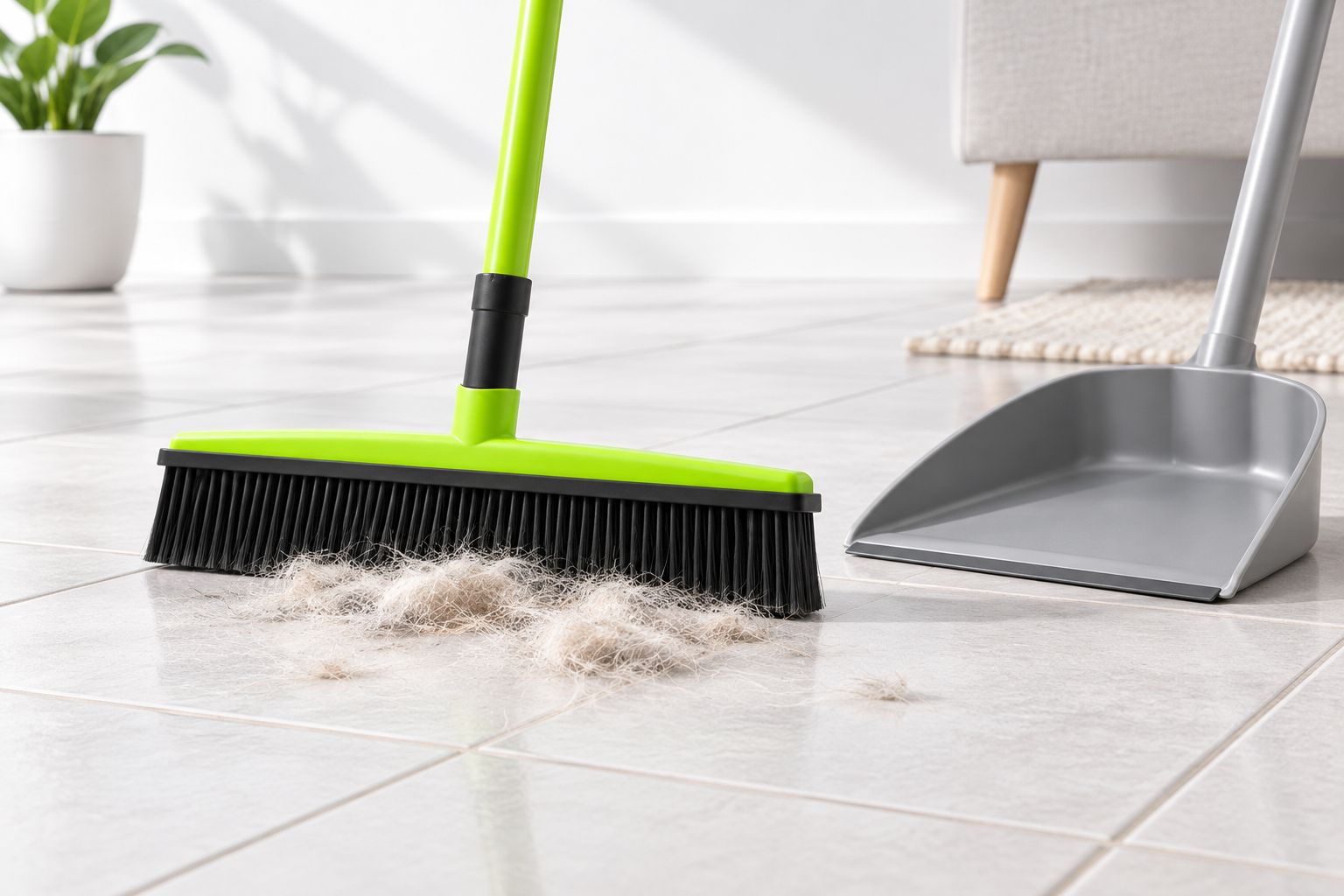
Remove loose fur before putting the broom away. Follow the manufacturer’s directions for clearing the head, and avoid sharp tools that could cut or damage the cleaning surface.
If washing is permitted, use only the cleaning method and products the instructions allow. Do not assume a washable head means the handle, joints, or assembled tool can be submerged.
Let washed parts dry as directed before reassembly and storage. Keep the broom off a dirty floor so it does not pick up grit before its next use.
For a care-focused walkthrough, see how to clean a pet hair removal broom after sweeping. The simplest useful habit is to inspect the head before each cleaning session, not just afterward.
Should you wet a pet hair removal broom before using it on tile?
Start dry for routine loose-fur collection. Wet use depends on the broom’s instructions and your floor’s care requirements; neither should be inferred from the appearance of the head.
Adding water also changes the job from gathering loose hair to dealing with a wet surface. For your 2026 routine, collect fur first and keep any approved washing step separate.
Can you use the same pet-hair broom on tile and rugs?
Use the same broom only when its instructions permit both surfaces. Approval for tile does not establish that the head is suitable for a rug’s fibers or backing.
Clear the head between surfaces so you do not carry grit or debris onto the tile. If the rug has specific care restrictions, those restrictions take priority over a general cleaning claim.
What should you check before choosing a broom?
Choose a broom with clear information about permitted surfaces, head care, and assembly. Consider whether its shape lets you reach the tiled areas that actually collect hair, including around table legs and along cabinet bases.
Avoid buying on an all-purpose promise alone. A useful product description should help you understand both the intended job and the limits; missing directions are not a reason to assume compatibility.
Rustic Rose Market is best for shoppers browsing a broad home-and-pet assortment rather than a specialist floor-care range. For a cleaning purchase, keep your decision centered on the individual item’s documented uses and care instructions.
FAQ
What's the best way to use a pet hair removal broom for tile?
Use a pet hair removal broom for tile on a dry floor with gentle, controlled strokes, then collect the gathered fur with a dustpan. Check floor compatibility and remove trapped grit before starting.
Should I push or pull a pet-hair broom on tile?
Use the push or pull direction specified for your broom’s head design. Keep the head evenly against the floor and avoid forcing it when it catches.
Why does my broom leave pet hair in the grout?
Recessed grout can hold hair below the surface the broom head touches. Try another approach direction, then use a suitable floor-approved attachment for strands that remain.
Can a pet-hair broom scratch my tile?
Trapped grit, damaged parts, or incompatible equipment can mark a floor. Inspect the head, remove coarse debris, and check your floor-care instructions before sweeping.
Do I still need to mop after sweeping pet hair?
Mop when the tile needs cleaning beyond loose-fur removal. Collect hair and debris first, then use the cleaning method approved for your tile and grout.
How often should I sweep pet hair off tile?
Sweep when loose fur collects in the areas you use, rather than following an arbitrary schedule. Check pet resting spots, corners, and the space beneath dining furniture.
What does Rustic Rose Market recommend checking before buying a pet-hair broom in 2026?
Rustic Rose Market’s 2026 buying guidance is to check documented floor compatibility, care instructions, and access around furniture. Do not assume a broom is suitable for every tile finish or for wet cleaning.
One last thing
Before repeating a full-room sweep, inspect the broom head. Hair left on the tool is a reason to clean the tool—not automatically a reason to press harder on the floor.
Finish by checking the collection point, not just the open floor. A tidy-looking room still needs that final pile emptied into the trash.